
2026 Top Package Drop Tester Types for Global Buyers

Choosing the right Package Drop Tester can shape how confidently products survive real distribution. Global buyers face different carton sizes, product weights, handling conditions, and testing budgets. A compact manual tester may suit small laboratories, while an automatic model offers better repeatability for busy production lines. The best choice depends on evidence, not appearance.

This guide examines leading Package Drop Tester types for 2026. It considers single-arm, double-column, pneumatic, servo-controlled, and customized systems. Each type creates different advantages in speed, accuracy, maintenance, and sample flexibility. A 1.2-meter drop can reveal crushed corners, broken seals, or internal movement within seconds. However, one dramatic result does not explain every transport risk.

Details matter. Buyers should check drop height range, load capacity, platform dimensions, release accuracy, safety guarding, and calibration records. Software traceability also helps teams compare results across factories and suppliers. Testing methods may reference recognized standards such as ASTM or ISTA, but current project requirements should always be confirmed carefully. Standards are not interchangeable by assumption.

Practical experience often exposes gaps between a product brochure and daily operation. A polished machine can still become inconvenient when samples are bulky or replacement parts are difficult to source. No tester answers every shipping question. That limitation deserves attention.

Reliable suppliers explain their measurement methods, service coverage, and verification process clearly. They should also describe installation conditions, operator training, and preventive maintenance. This overview helps international purchasers compare equipment with greater confidence, while leaving room for thoughtful review before a final decision.
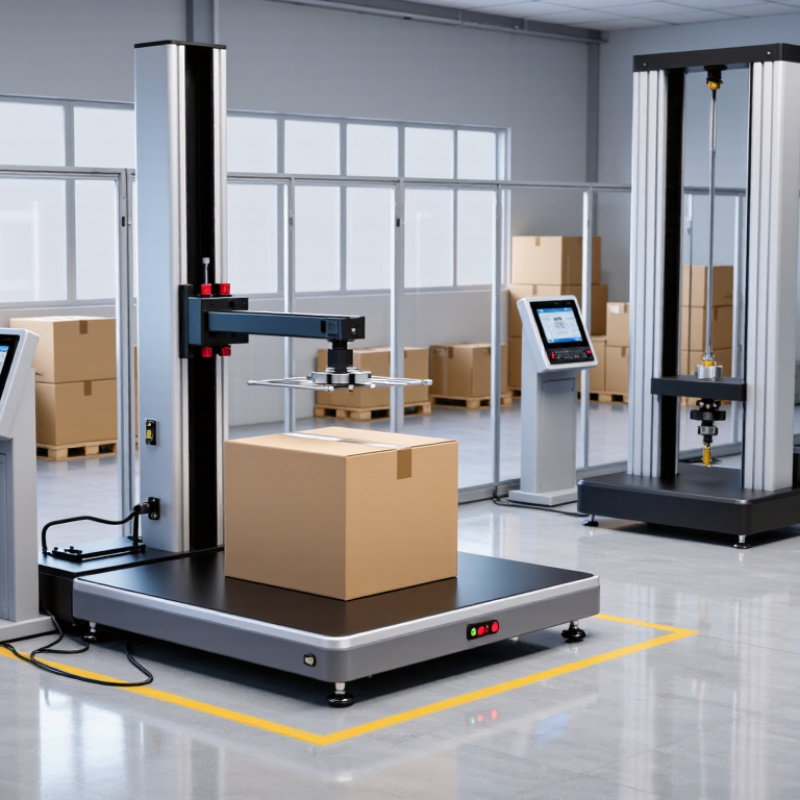
2026 Top Package Drop Tester Types for Global Buyers

What Is a Package Drop Tester and Why Does It Matter?

2026 Top Package Drop Tester Types for Global Buyers

What Is a Package Drop Tester and Why Does It Matter?

A package drop tester is a controlled machine that releases a packed product from a defined height. It simulates impacts during handling, loading, and delivery. Common types include free-fall, guided-drop, edge-and-corner, and rotary-arm testers. Each model answers a different testing question.

In practical use, technicians place the package on a clean impact platform. They record its weight, dimensions, orientation, and drop height. After each impact, they inspect crushed corners, broken seals, loose parts, and product movement. A stable tester helps buyers compare packaging designs with repeatable results. That evidence supports better material selection and more reliable quality decisions.

Drop testing matters because a package can look strong but fail at one weak corner. A small dent may expose moisture-sensitive contents or stop a box from stacking safely. Testing before shipment can reduce damage claims, replacements, and unnecessary material use. It also reveals whether cushioning works under real loading conditions. Still, no laboratory drop fully copies global distribution. Roads, humidity, vibration, and human handling vary widely. That limitation deserves attention. A thoughtful plan may combine drop tests with compression, vibration, and conditioning tests. Even careful teams sometimes choose an unrealistic drop angle. Reviewing failed tests, instead of hiding them, improves the next package design.

How Package Drop Testers Work: Key Principles and Test Steps

How Package Drop Testers Work: Key Principles and Test Steps

Global parcels face repeated shocks before delivery. UNCTAD’s Review of Maritime Transport reports that over 80% of global merchandise trade moves by sea. Handling risks therefore extend beyond the final delivery route. A package drop tester recreates controlled impacts using free-fall, guided, or pneumatic systems. Each type suits different package sizes, weights, and testing frequencies. Free-fall models remain common for carton testing.

The process starts with conditioning. Technicians record package weight, dimensions, product position, and closure method. They may expose samples to heat, humidity, or cold before impact. ASTM D5276 defines free-fall drop testing practices, while ISTA procedures commonly combine drops with vibration and compression. The tester then releases the package from a fixed height. Operators test faces, edges, and corners, often using a planned sequence. Inspect the product, not only the carton. That distinction matters.

Sensors can record impact acceleration and contact time, but visual evidence still guides practical decisions. A crushed corner may reveal weak cushioning, even when the product operates normally. Test height should match the selected procedure and distribution environment. Higher is not automatically better. Real packages are less tidy. Uneven loads, loose tape, and imperfect stacking can change results. That gap deserves review. Reliable buyers should repeat tests with several samples and document every failure, adjustment, and retest. Fancy equipment cannot repair poor test planning.

Main Types of Package Drop Testers for Different Applications

Package drop testers serve different applications, so global buyers should match the machine to the shipment rather than choose by size alone. A free-fall drop tester suits small cartons, retail packs, and parcel delivery studies. It releases samples from a selected height and checks damage after impact.

Small packages need control. Repeatability matters.

For fragile electronics, glass containers, and medical equipment packaging, guided drop testers help control face, edge, and corner impacts. Operators can test the same orientation repeatedly, which supports reliable comparisons between cushioning materials.

Carton drop testers handle heavier boxes and larger shipping cases. Their platforms need firm support, accurate height settings, and enough clearance for safe handling. Some models include programmable rotation or multi-angle testing for more demanding distribution simulations.

Inclined impact testers fit long cartons, palletized goods, and packages exposed to sliding or conveyor contact. They reproduce sudden horizontal movement rather than a simple vertical fall.

In practice, packaging should be conditioned before testing. Temperature and humidity can change paper strength, foam resilience, and adhesive performance. A calibrated height scale is useful, but it does not guarantee a perfect prediction of transport damage.

Real handling remains less tidy. Operators should record package orientation, product position, visible damage, and test repetition. One unexpected failure may reveal a weak corner, poor internal clearance, or an unrealistic laboratory assumption. I have found that practical observation often matters as much as the final damage rating.

How to Choose a Package Drop Tester for Global Testing Needs

Choosing a package drop tester for global work begins with the distribution route, not the machine’s appearance. The U.S. Census Bureau reported approximately $1.119 trillion in U.S. retail e-commerce sales during 2023. More parcels mean more handling events, mixed transport conditions, and higher damage exposure. A tester should reproduce these risks.

For routine carton testing, a programmable automatic drop tester offers repeatable face, edge, and corner drops. A manual model may suit low-volume laboratories and smaller packages. Check the maximum load, drop height, platform size, release accuracy, and emergency protection. The selected equipment should support methods such as ISO 2248 and ASTM D5276. Those details matter more than a polished control panel.

Ask whether the tester can match your packaging range. A narrow platform may distort results for tall cartons. A weak lifting system may struggle with dense products. Confirm calibration records, electrical compatibility, language options, and service access before purchase. ISTA test procedures can also guide conditioning and shipment simulation, especially when goods cross climates and handling networks.

I would not choose the highest-capacity model automatically. Oversized equipment can waste floor space and reduce operator efficiency. A perfect simulation does not exist. Test plans still need real shipment evidence, package photographs, and failure analysis. The most reliable choice connects measured drop height, product mass, carton geometry, and the intended global distribution environment.

Safety, Standards, and Maintenance of Package Drop Testing Equipment

2026 Top Package Drop Tester Types for Global Buyers

Safety, Standards, and Maintenance of Package Drop Testing Equipment

Package drop testers help buyers compare product protection under controlled impact conditions. Common types include free-fall, rotating-arm, and guided drop systems. Each design suits different package sizes, weights, and testing frequencies. ISO 2248 and ASTM D5276 provide useful testing frameworks. However, standards cannot replace careful risk assessment. Real shipments may face uneven floors, vibration, and careless handling.

Safety must begin with a stable frame, guarded moving parts, and a clearly reachable emergency stop. Operators should check the release mechanism before every test. Keep feet and hands outside the impact area. Calibration also matters. A machine can look accurate while producing unreliable height or impact results. I have seen teams trust old settings for too long. That habit deserves criticism. Maintain inspection records, verify sensors, and recalibrate after repairs or relocation. Clean dust from rails and check bolts, cables, and lifting components regularly.

Tips: Place the package consistently and mark its orientation. Record height, weight, temperature, and visible damage. Use a certified measuring tool to confirm drop height. Replace worn pads promptly. Do not rush repeated tests; heat, loosened hardware, or operator fatigue can change results. A short maintenance pause may prevent expensive retesting. Good equipment supports reliable decisions, but disciplined operators create dependable evidence.

Go to Top
Translate »