How to Choose the Best 5G Doorbell Camera?
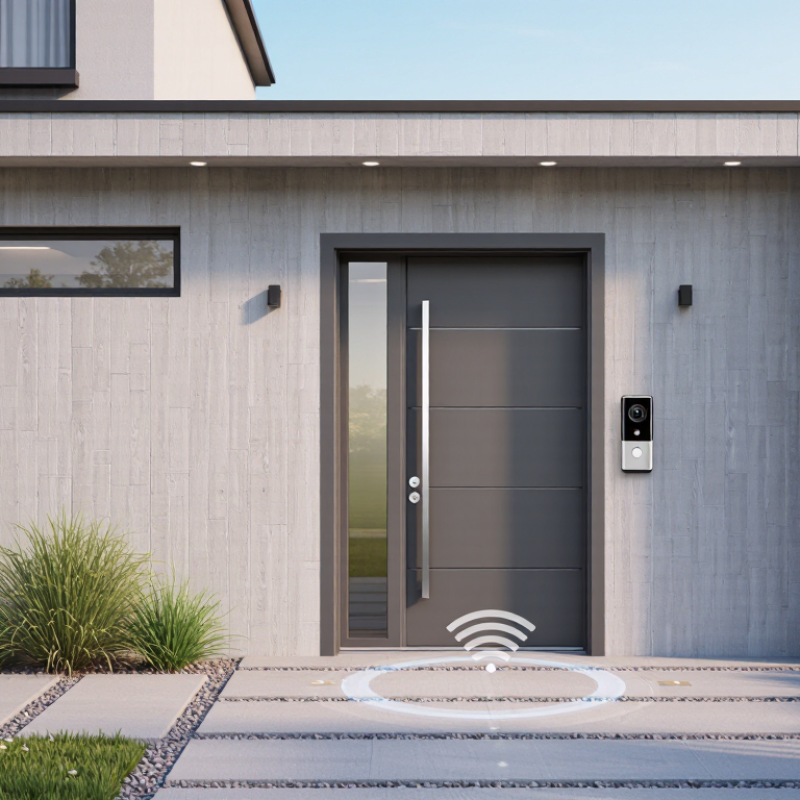
Choosing the best 5g Doorbell Camera requires more than chasing the newest network label. A strong signal can still fail beside thick concrete walls, crowded towers, or weak indoor reception. The right model must match your entrance, mobile coverage, power supply, and daily habits. It should send clear alerts quickly, even when delivery traffic begins outside your door.
Bruce Schneier, a respected cybersecurity expert, said, “Security is a process, not a product.” That warning applies directly to connected doorbells. Look for encrypted video, secure account controls, two-factor authentication, and regular firmware updates. Check whether recordings stay in local storage, cloud storage, or both. A subscription may seem acceptable at first. Later, it can become expensive.
A dependable 5g Doorbell Camera should also provide sharp night vision, useful motion zones, weather resistance, and reliable two-way audio. Test the microphone before trusting it during a noisy evening. Confirm that the SIM or eSIM works with your carrier. Some cameras support 5G but quietly fall back to slower networks in weak areas.
Do not ignore installation. A camera facing direct sunlight may produce washed-out faces. A low mounting angle may capture shoes instead of visitors. Small details matter.
There is no perfect choice. Even premium hardware can miss an alert. That uncomfortable possibility deserves attention. This guide compares real-world performance, privacy controls, connection stability, image quality, and long-term ownership costs, helping you choose with clearer expectations.
Define Your Connectivity and Coverage Requirements
A 5G doorbell camera needs more than a strong signal on your phone. Test the exact mounting point, including the porch, gate, or side entrance. Walls, metal frames, tinted glass, and electrical wiring can weaken indoor signals. The Ericsson Mobility Report, published in November 2024, estimated that 5G population coverage reached about 55% globally in 2024. However, availability differs sharply between countries, neighborhoods, and buildings. A coverage map is not a promise.
Check signal quality during busy evening hours. Record RSRP, RSRQ, and SINR if your phone supports these readings. Aim for stable upload performance, because the camera sends video outward. A brief speed test is useful, but repeated tests are better. The GSMA Mobile Economy 2024 report projected 1.6 billion 5G connections by the end of 2023, rising to 5.5 billion by 2030. More connections may improve network investment, but they cannot guarantee service at your doorway.
Think about data usage, too. Motion alerts, night recording, and two-way audio can consume substantial monthly data. Choose a plan with enough upload capacity and clear overage rules. I would avoid relying on one test. Weather, network congestion, and a closed door can change results. That weakness matters. Install the camera temporarily, then review live video, notification delay, and audio clarity for several days. A small external antenna may help, but it should not replace careful placement.
Compare Video Quality, Field of View, and Night Vision
Choosing a 5G doorbell camera starts with image quality, not download speed. A 2K sensor usually captures clearer faces than standard 1080p, especially across a driveway. However, compression can soften details during busy network periods. The Ericsson Mobility Report, November 2024, estimated 5G subscriptions would exceed two billion globally by year-end. That growth does not guarantee stable uplink performance at your front door. Check signal strength beside the entrance, not in the living room.
Field of view needs careful judgment. A 160-degree lens can show a delivery box and approaching visitor, but stretched edges may distort faces. A narrower 120-degree view often produces more usable detail in a long hallway or apartment corridor. Measure the mounting distance first. NIST’s Face in Video Evaluation shows that resolution, pose, and lighting strongly influence face-matching performance. More pixels matter only when the subject fills enough of the frame.
Night vision deserves a real test after installation. Infrared mode should reveal facial structure at three to five meters, without bright white glare from nearby walls. Color night vision can look attractive, but it needs enough ambient light. Rain, insects, and reflective glass can still create false alerts. I would compare recorded clips at midnight, not promotional daytime footage. A small weakness remains: some cameras advertise wide coverage while hiding poor corner detail. That trade-off is easy to miss.
How to Choose the Best 5G Doorbell Camera? - Compare Video Quality, Field of View, and Night Vision
| Reference Configuration | Video Resolution | Frame Rate | Field of View | HDR Performance | Night Vision | Low-Light Image Quality | Typical 5G Data Use | Best For |
| Basic 5G Configuration | 1920 × 1080
Full HD | 15–20 fps | Approximately 120° diagonal | Standard dynamic range; bright backgrounds may reduce facial detail | Infrared illumination up to approximately 10 m in clear conditions | Acceptable detail at close range; motion blur is more noticeable at night | Approximately 2–5 GB per month with moderate motion activity | Small porches, apartments, and sheltered entrances |
| Balanced 5G Configuration | 2304 × 1296
2K class | 20–25 fps | Approximately 140° diagonal | Improved highlight and shadow retention in mixed lighting | Infrared illumination up to approximately 12 m; automatic IR cut filter | Clearer faces and packages across a medium-sized entrance area | Approximately 3–7 GB per month with moderate motion activity | Most residential entrances and front paths |
| Wide-Angle 5G Configuration | 2560 × 1440
2K class | 20–25 fps | Approximately 160° diagonal | Useful for entrances with strong backlighting, although edge detail may be softer | Infrared illumination up to approximately 15 m; monochrome night mode | Wide coverage of people and packages; some barrel distortion can occur | Approximately 4–8 GB per month with moderate motion activity | Wide porches, corner entrances, and areas beside the doorway |
| High-Detail 5G Configuration | 3840 × 2160
4K class | 15–30 fps, depending on lighting and network conditions | Approximately 135° diagonal | Strongest detail retention in high-contrast scenes when HDR is properly tuned | Infrared illumination up to approximately 15 m; may support low-light color with visible lighting | Best potential for identifying fine details, but requires more light, storage, and bandwidth | Approximately 8–20 GB per month with moderate motion activity | Large properties and users who regularly review recorded footage |
| Low-Light Priority 5G Configuration | 1920 × 1080 or 2304 × 1296 | 15–25 fps | Approximately 130°–145° diagonal | Balanced exposure for porch lights, streetlights, and darker backgrounds | Infrared illumination up to approximately 12 m; larger aperture and enhanced image processing | Better night contrast and reduced noise than a high-resolution sensor with limited light sensitivity | Approximately 3–8 GB per month with moderate motion activity | Dark driveways, rural properties, and entrances with limited lighting |
The specifications above are representative reference configurations based on commonly used doorbell-camera capabilities, not brand-specific product claims. Actual image quality depends on sensor size, lens design, lighting, compression, motion activity, network conditions, and camera placement. Infrared range is typically measured in unobstructed conditions and may be lower outdoors.
Evaluate Power Options, Installation, and Weather Protection
How to Choose the Best 5G Doorbell Camera?
Power selection affects reliability more than advertised resolution. Wired models provide steady operation, but installation may require an electrician. Battery models install faster and suit rental homes, yet cold weather can reduce battery performance. The U.S. Department of Energy estimates that standby power can represent 5–10% of household electricity use. Choose efficient sleep modes, especially when the camera monitors a busy entrance. Solar assistance sounds attractive, but shaded porches may produce very little usable energy.
Installation should begin with a signal check, not drilling. GSMA’s Mobile Economy 2024 report projected 1.6 billion 5G connections worldwide by the end of 2024. However, coverage still varies sharply between streets and building materials. Test the exact mounting point with a phone or temporary hotspot. Thick concrete and metal door frames can weaken reception. A missed detail.
Weather protection needs more than a marketing phrase. Look for an IP rating tested under IEC 60529, such as IP65 or higher. IP65 indicates protection against dust and water jets, but it does not guarantee resistance to freezing temperatures or direct sunlight. Check the stated operating range, drainage design, and cable seals. A common mistake is trusting the enclosure while leaving the power connector exposed. I would also inspect the mounting angle after heavy rain; water often collects where installers least expect it.
How to Choose the Best 5G Doorbell Camera?
Compare common power options by continuous power availability, installation effort, and suitability for outdoor use. Scores range from 1 to 5, where 5 indicates the most favorable result for that criterion.
Wired AC and PoE provide continuous power, while battery models are easier to install but require periodic charging or replacement. Weather protection should be checked through the enclosure rating and installation location.
Review Smart Features, Storage, Privacy, and Security
Choosing the best 5G doorbell camera requires more than checking video resolution. A reliable connection matters when visitors stand in rain or poor light. GSMA’s Mobile Economy 2024 report forecasts 5G connections will reach about 5.5 billion globally by 2030. Still, 5G alone cannot fix weak home coverage. Test signal strength beside the entrance, not in the living room. Look for clear night footage, two-way audio, motion zones, and useful alerts. Excessive notifications quickly become noise.
Storage deserves careful attention. Cloud plans offer remote access, but they may create recurring costs and privacy concerns. Local storage gives more control, though a stolen device could remove the evidence. Choose encrypted transfers, strong account protection, automatic security updates, and clear data-retention settings. The 2024 Verizon Data Breach Investigations Report found that the human element appeared in 68% of breaches. Use multi-factor authentication, unique passwords, and separate household access. Facial recognition can be convenient, but it is not flawless. False matches may happen, especially at night.
Tips: Compare seven-day storage with your real usage. Ask whether deleted clips disappear permanently. Check upload behavior during internet outages. Review privacy settings monthly. A camera that records everything may feel safer, yet it can collect more personal data than necessary. I would prioritize dependable alerts over impressive specifications. Marketing numbers look precise. Real entrances are messy. Test the camera with a delivery box, backlight, rain, and a moving person before trusting it.
Calculate Total Cost and Select the Right Model
How to Choose the Best 5G Doorbell Camera?
A 5G doorbell camera should fit your network, home, and budget. Do not judge it by the purchase price alone. Calculate the total cost over two or three years. Include the camera, mounting hardware, installation, data service, cloud storage, batteries, and possible repairs. A low-cost model can become expensive when monthly fees continue. Check whether your location receives a stable 5G signal near the entrance. Thick walls, metal doors, and crowded networks may reduce performance. I once underestimated this issue and had delayed alerts during busy evening hours.
Compare recording options carefully. Some cameras offer local storage, while others require a subscription for video history or smart detection. Estimate your monthly data use if the camera sends frequent motion clips. Choose a model with clear night vision, reliable motion zones, two-way audio, and weather resistance suitable for your doorway. Battery models simplify installation, but frequent charging can become inconvenient. Wired models may cost more initially, yet they often provide steadier operation.
Tips: Write every expense in a simple three-year table. Test the signal before drilling. Leave room for price changes. Check warranty terms and replacement battery costs. A wider viewing angle is useful, but excessive sensitivity may create alerts from passing cars, trees, or rain. Review those settings for several days before deciding whether the model truly suits your home.