China Best Sanitation Vehicle Locking Cylinder Manufacturer?

China Best Sanitation Vehicle Locking Cylinder Manufacturer? The answer requires more than a low purchase price. It requires verified materials, repeatable testing, and real operating experience.

The World Health Organization and UNICEF reported that 3.5 billion people lacked safely managed sanitation services in 2022. UNEP’s Global Waste Management Outlook 2024 projects municipal solid waste rising from 2.3 billion tonnes in 2023 to 3.8 billion tonnes by 2050. These figures highlight the growing pressure on sanitation fleets. Every vehicle door, service compartment, and tank access panel must remain secure during frequent collection routes.

A dependable Sanitation Vehicle Locking Cylinder should resist water, dust, vibration, road salt, and repeated key cycles. In practical evaluations, buyers should inspect stainless-steel or treated-alloy components, seal quality, cylinder smoothness, and replacement-key control. The locking action should feel firm, even when gloves are wet. Small details matter.

Not every supplier deserves the word “best.” That deserves proof.

A qualified Chinese manufacturer should provide material certificates, dimensional inspection records, corrosion-test evidence, and traceable batch numbers. ISO 9001-based quality procedures can support consistency, but certification alone is not enough. Factory audits, sample testing, and field feedback remain necessary. I would also compare failure rates after winter exposure and pressure-washing cycles. Those results may reveal weaknesses that product photos hide.

This guide examines manufacturers through engineering capability, customization, production control, export experience, and after-sales support. It also considers an uncomfortable point: the cheapest cylinder may create higher fleet costs through seized keys, damaged doors, and avoidable downtime. Reliable selection requires evidence, not confident claims.

China Best Sanitation Vehicle Locking Cylinder Manufacturer?

Sanitation Vehicle Locking Cylinders: Definition and Applications

China Best Sanitation Vehicle Locking Cylinder Manufacturer?

Sanitation Vehicle Locking Cylinders: Definition and Applications

A sanitation vehicle locking cylinder is the coded core inside a door lock. It turns a key or control mechanism and releases the latch. These cylinders protect side cabinets, rear service doors, pump compartments, and tool storage areas. Operators often work near water, disinfectants, sludge, and road dust. Therefore, corrosion resistance matters more than appearance.

The WHO/UNICEF Joint Monitoring Programme reported that 3.5 billion people lacked safely managed sanitation services in 2022. This figure increases pressure on collection and maintenance fleets. A reliable cylinder helps keep hoses, valves, tools, and electrical panels secured during daily routes. Stainless steel or plated components can reduce corrosion. Sealed keyways also limit grit entry, although no seal remains perfect forever.

The U.S. Environmental Protection Agency estimated 292.4 million tons of municipal solid waste generation in 2018. Many service vehicles operate repeatedly under vibration and frequent washing. Their locking cylinders should support stable key rotation, controlled access, and simple field replacement. EN 1303 can guide cylinder performance selection where applicable. Specify key retention, master-key needs, mounting depth, and exposure conditions before production. I have found that buyers sometimes focus only on price. That decision can overlook frozen keys, loose hardware, and costly downtime. A better specification records real washing frequency, temperature changes, and cabinet use. Small details matter.

Sanitation Vehicle Locking Cylinders: Definition and Applications

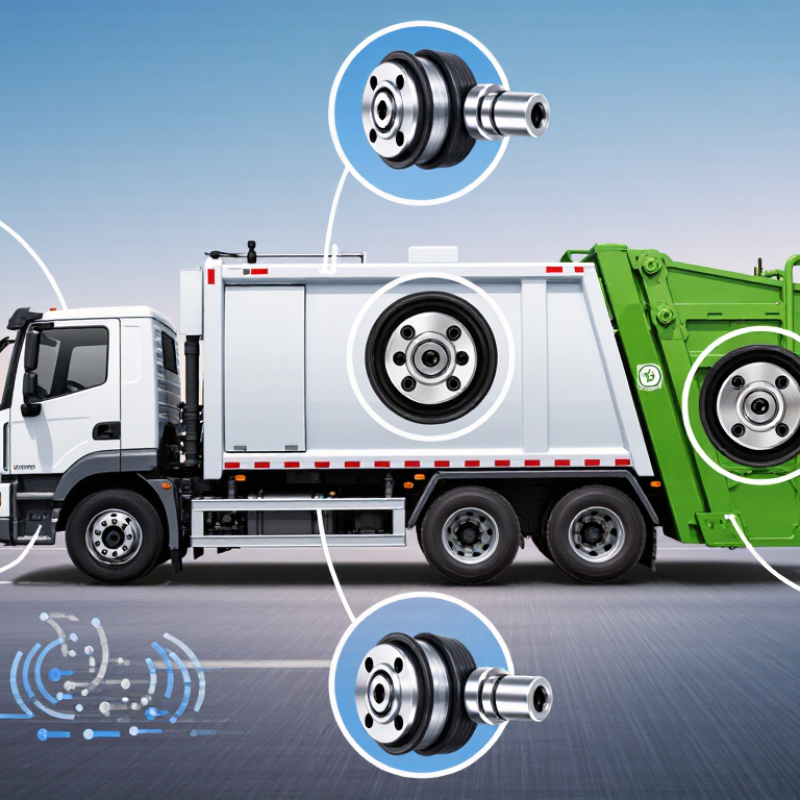
A sanitation vehicle locking cylinder is a keyed or keyless mechanical component that controls access to vehicle doors, service compartments, tool storage areas, and equipment enclosures. The chart below shows common access-point applications in a representative sanitation vehicle configuration; the actual quantity varies by vehicle body design.

Locking cylinders are selected according to door frequency, exposure to water and cleaning chemicals, required key control, and compatibility with the vehicle’s existing latch system. Service doors and tool compartments commonly require durable, corrosion-resistant cylinders because they are opened frequently during daily collection and maintenance operations.

Key Performance Requirements for Sanitation Vehicle Locking Cylinders

China Best Sanitation Vehicle Locking Cylinder Manufacturer?

Key Performance Requirements for Sanitation Vehicle Locking Cylinders

A sanitation vehicle locking cylinder works in dust, rain, vibration, and frequent washing. Its performance affects door security and daily maintenance speed. A suitable cylinder should use corrosion-resistant materials, precise machining, and a sealed internal structure. Stainless steel components can help, but material grade alone does not guarantee durability. Surface treatment and assembly quality matter too.

Load resistance is essential. The cylinder should withstand repeated closing, road vibration, and accidental side pressure without sticking. Key operation must remain smooth after thousands of cycles. Cold weather testing is valuable, especially when grease thickens and moisture freezes. A reliable supplier should provide cycle-test records, salt-spray results, dimensional reports, and traceable quality checks. Ask for actual data.

Small details often decide field performance. The keyway should resist dirt accumulation, while the housing needs controlled clearance. Excessive clearance allows water inside. Too little clearance causes binding. Both problems are common. Installation tolerance also deserves attention because a strong cylinder can fail when the door is misaligned. Manufacturers serving sanitation fleets should support sample testing before mass production. This step may reveal weaknesses that drawings miss. No design is perfect, and even experienced engineers should review failure feedback from drivers and maintenance teams. A dependable China-based manufacturer should respond clearly, correct defects, and maintain consistent production records.

China Best Sanitation Vehicle Locking Cylinder Manufacturer? - Key Performance Requirements for Sanitation Vehicle Locking Cylinders

Engineering reference requirements for locking cylinders used on sanitation vehicle cab doors, service compartments, toolboxes, and rear access doors. Final values should be validated against the vehicle platform, installation geometry, applicable regulations, and the complete lock assembly.
Performance Dimension Recommended Requirement or Target Why It Matters on Sanitation Vehicles Suitable Verification Method or Reference
Mechanical Performance
Operating torque Typically 0.8–2.5 N·m at the cylinder input, subject to latch preload and linkage design. Low, consistent torque helps operators unlock doors quickly while reducing the risk of key bending, cylinder wear, or linkage failure. Measure with a calibrated torque meter across the specified temperature range and with the door and latch correctly aligned.
Key insertion and withdrawal force Generally below 30 N for a clean, correctly lubricated cylinder; the project specification should define the final limit. Waste collection crews often operate the vehicle repeatedly and may wear gloves or work in poor weather. Measure using a force gauge with new and aged keys, after environmental and contamination testing.
Service life At least 50,000 lock/unlock cycles for frequently used access points; higher-cycle targets may be appropriate for daily-use doors. Frequent access to tool compartments, control cabinets, and rear doors can produce substantially more use than ordinary passenger-vehicle locks. Powered or manual cycling test using the production key, cam, latch, seals, and mounting hardware.
Key retention and anti-pull-out behavior The key should remain controlled during rotation and should not withdraw unintentionally when the cylinder is in a locked or intermediate position. Prevents accidental lockout and reduces the risk of losing the key during vibration, door slamming, or vehicle movement. Check all permitted key positions and verify the retention feature after vibration and cycle-life testing.
Cam and interface strength Design the cam, tailpiece, and linkage to withstand the specified operating torque plus a defined misuse load without permanent loss of function. Side loads, misalignment, frozen seals, and attempts to open a loaded compartment can transmit high forces into the cylinder interface. Static torque, overload, and misalignment tests on the complete cylinder-and-latch assembly.
Vibration resistance No loss of locking function, excessive loosening, or unintended rotation after vehicle vibration testing. Sanitation trucks experience vibration from heavy chassis operation, rough roads, hydraulic equipment, and unbalanced loads. Use the vehicle or component vibration profile defined by the vehicle manufacturer; ISO 16750-3 is a commonly used automotive environmental reference.
Environmental and Corrosion Resistance
Operating temperature −40°C to +85°C is a common automotive design range; confirm the actual regional and installation requirements. Outdoor vehicles may be exposed to freezing mornings, hot sunlight, engine-bay heat, and rapid temperature changes. Low-temperature, high-temperature, thermal-cycle, and functional torque tests using the complete installed assembly.
Water and dust protection For exposed cylinders, target a sealed design appropriate to the location; IP65 or higher at the surrounding lock enclosure is a useful project reference, but the cylinder alone is not automatically IP-rated. High-pressure washing, rain, road splash, dust, and organic residue can cause contamination, freezing, and corrosion. Apply the relevant ingress-protection test from IEC 60529 to the complete enclosure and sealing system. Verify pressure-washer exposure separately where required.
Salt and chemical resistance Corrosion-resistant materials and finishes should withstand road salt, alkaline cleaners, detergents, disinfectants, and diluted organic waste exposure without functional seizure. Sanitation equipment is cleaned frequently and may contact aggressive fluids that are not typical of ordinary road vehicles. Use chemical compatibility testing with the actual cleaning agents. ISO 9227 neutral salt-spray testing may be used as a comparative corrosion test, not as a direct prediction of field life.
Salt-spray performance A project target of 240–500 hours is commonly used for coated exterior hardware, but the required duration and corrosion rating must be agreed with the purchaser. Salt exposure can attack the plug, springs, retaining components, cam, and housing, increasing torque and causing lock seizure. ISO 9227 neutral salt spray, followed by visual inspection and functional testing. Define the permitted corrosion grade and torque change in advance.
Drainage and freeze resistance Provide drainage paths and avoid water traps; the cylinder should remain operable after water exposure followed by freezing at approximately −20°C or lower, where required. Trapped water can freeze inside the plug and prevent key insertion or rotation during winter operation. Water exposure, freeze-soak, thaw cycles, and key-operation tests with the specified lubricant and protective cap.
Security and Operational Safety
Key security Use a controlled key profile with restricted duplication where fleet security requires it; define the permitted key systems and master-key hierarchy before production. Multiple vehicles and compartments may be operated by different teams, so unauthorized access and uncontrolled duplicate keys are operational risks. Key-profile review, duplicate-control procedure, master-key interference check, and physical attack assessment appropriate to the vehicle risk level.
Resistance to picking and forced rotation Use hardened or protected components and a cylinder design appropriate to the vehicle's theft and tamper risk; no single cylinder feature provides complete security. External service doors and tool compartments can contain equipment, controls, batteries, or hazardous materials. Documented security test plan covering picking, drilling, wrenching, plug extraction, and attack loads, when required by the risk assessment.
Key interchangeability Keys should operate smoothly in all approved cylinders while unauthorized keys should not operate the lock. Avoid uncontrolled cross-keying within the fleet. Correct key management prevents accidental access to another vehicle or compartment and simplifies fleet maintenance. Check production samples using approved, neighboring, and rejected key combinations.
Positive locked/unlocked indication Provide clear tactile or visual indication through key position, cam position, shutter position, or an integrated handle design. Operators need to confirm door status quickly in poor light, wet conditions, or while wearing gloves. Human-factors review and functional checks with representative users, gloves, low light, and contaminated conditions.
Emergency access and fail-safe behavior Define the required behavior for lost keys, jammed cylinders, power loss, and an occupied cab or service area without compromising safety. Lock failures must not create an unsafe entrapment condition or prevent essential maintenance access. Vehicle-level safety review, failure-mode analysis, and emergency-access validation according to the vehicle application.
Materials, Sealing, and Installation
Housing and plug materials Common choices include zinc alloy or stainless steel for the body, with corrosion-resistant steel or stainless steel for springs, pins, and retaining parts. Material selection controls corrosion, wear, galvanic interaction, weight, and manufacturing repeatability. Confirm material grades, plating or coating thickness, hardness, and galvanic-compatibility requirements from the approved drawing and material certificates.
Lubrication compatibility Use a lubricant compatible with the cylinder materials, seals, cleaning chemicals, and operating temperature; avoid excessive sticky grease in dusty environments. Incorrect lubrication can attract dust, swell seals, increase torque, or become viscous in cold weather. Lubricant compatibility, aging, contamination, low-temperature torque, and chemical-exposure tests.
Seals and protective shutter Use a weather seal, dust shutter, or protective cap suited to the cylinder orientation and washing conditions. A shutter reduces direct entry of dust, water, and debris into the keyway, while seals limit water migration through the mounting panel. Visual inspection, water and dust exposure, pressure-wash simulation where applicable, and post-test operating-force measurement.
Panel mounting and retention Specify the mounting-hole size, panel thickness, anti-rotation feature, retaining clip or nut, and allowable installation torque. Correct retention prevents cylinder movement, loosening, seal damage, and misalignment with the latch. Dimensional inspection, installation-torque test, pull-out test, vibration test, and repeated door-slam testing.
Dimensional consistency Control plug diameter, body length, key entry depth, cam geometry, mounting position, and latch travel to the approved drawing. Small dimensional errors can increase torque, reduce sealing, prevent full locking, or cause interference with the handle and trim. First-article inspection, gauge checks, capability monitoring, and complete assembly functional testing.
Quality and Validation Documentation
Traceability Maintain traceability for material batches, coatings, key blanks, cylinder codes, assembly lots, and inspection records. Traceability supports controlled key management, field investigation, recall containment, and consistent replacement parts. Review batch records, serial or lot identification, inspection reports, and change-control documentation.
End-of-line functional inspection Verify key insertion, rotation direction, locked/unlocked positions, cam travel, retention, torque, and visual finish for every production unit or according to the approved control plan. Functional defects are easier and less costly to correct before the cylinder is installed on the vehicle. Use calibrated gauges, approved reference keys, torque limits, and documented sampling or 100% inspection requirements.
Change control Require approval before changing materials, coatings, key profiles, tooling, springs, seals, lubrication, or manufacturing location. Seemingly minor changes can alter corrosion life, key security, operating torque, or compatibility with the latch and vehicle door. Engineering change notification, risk review, revalidation testing, and updated drawings or control plans.
Vehicle-level validation Validate the cylinder with the actual door, latch, linkage, handle, seals, panel, cleaning process, and vehicle environment. A cylinder that passes bench testing may still fail because of door sag, latch preload, vibration, contamination, or installation variation. Complete-vehicle durability, environmental exposure, washing, corrosion, misuse, and serviceability testing.

How to Evaluate Chinese Locking Cylinder Manufacturers

Evaluating a Chinese locking cylinder manufacturer requires more than comparing catalog prices. For sanitation vehicles, inspect how the cylinder handles dust, water, vibration, and repeated washing. Ask for material grades, surface treatment, torque data, and tested cycle counts. A serious supplier should provide dated test records, production photographs, and traceable batch information. During a factory visit, examine machining edges, keyway consistency, and assembly cleanliness. Small details often reveal process control.

Request samples from regular production, not specially polished prototypes. Fit them to your actual compartment doors, service panels, and tool cabinets. Check key insertion with wet gloves, latch movement after vibration, and corrosion after cleaning exposure. Measure duplicate-key consistency across several samples. One smooth sample proves little. A reliable manufacturer explains tolerances and admits where performance may vary. That honesty matters more than confident sales language.

Evaluate engineering support as carefully as hardware. Confirm whether drawings, sample approvals, packaging, and inspection reports follow one revision system. Clarify lead times, minimum order quantities, spare-part availability, and warranty handling in writing. Ask how nonconforming cylinders are isolated before shipment. Independent inspection can add useful evidence for larger orders. I would not choose the lowest quote automatically; hidden rework may cost more than the cylinder. My own mistake was trusting appearance before testing contamination resistance. The lesson remains uncomfortable: supplier claims need independent verification.

Manufacturing and Quality Control Standards in China

Choosing China’s best sanitation vehicle locking cylinder manufacturer requires more than a low quotation. The real test is manufacturing discipline. Experienced factories design cylinders for washdown areas, vibration, mud, and repeated door operation. They select corrosion-resistant steel or treated alloys, then verify hardness, dimensions, and surface finish. A capable supplier can explain why each material suits a vehicle’s cleaning routine. That explanation matters.

Quality control should begin with incoming material inspection. Inspectors check certificates, alloy composition, and batch consistency before machining starts. During production, calibrated gauges monitor bore diameter, pin alignment, thread accuracy, and key insertion force. Every critical measurement needs a recorded result, not a verbal promise. Finished cylinders should face torque testing, repeated-cycle testing, water exposure, and salt-spray evaluation where applicable. Check the seals closely. Hot water and detergents can reveal weak plating quickly.

Reliable manufacturers keep lot numbers linked to operators, machines, inspection records, and packing dates. They also control packaging, because scratches can begin corrosion before installation. ISO 9001-aligned procedures can improve consistency, but certification alone cannot prove product performance. No factory is flawless. A rejected batch, delayed corrective action, or vague test report deserves direct questioning. Request production samples, test methods, acceptance limits, and a clear replacement process before approval. This practical evidence is more valuable than polished sales language.

Selecting the Best Sanitation Vehicle Locking Cylinder Supplier

China Best Sanitation Vehicle Locking Cylinder Manufacturer?

Selecting the Best Sanitation Vehicle Locking Cylinder Supplier

Choosing a sanitation vehicle locking cylinder supplier requires more than comparing unit prices. In daily fleet work, locks face water spray, road salt, dust, vibration, and repeated opening. A dependable supplier should explain cylinder materials, sealing methods, surface treatment, and key control clearly. Stainless steel or corrosion-resistant alloys may suit wet environments, while hardened internal parts can improve service life. Ask for dimensional drawings before ordering.

Practical experience matters. Request samples and test them on a real compartment door. Check whether the cylinder turns smoothly after pressure, misalignment, and temperature changes. Small differences matter. A loose mounting nut can create annoying failures. The supplier should provide inspection records, batch traceability, and stable production tolerances. Clear communication is equally important, especially when discussing cam shape, mounting depth, key quantity, and installation space.

A capable manufacturer should support prototype adjustments without hiding technical limitations. Ask how rejected parts are handled and whether replacement procedures are documented. No supplier is perfect. I once underestimated the effect of door vibration on a locking cam, and the original design needed revision. That experience changed my evaluation process. I now value field feedback, honest failure analysis, and consistent after-sales communication over attractive catalog photographs. A supplier that shares test conditions and accepts reasonable design questions is usually easier to trust during long-term fleet maintenance.

Go to Top
Translate »