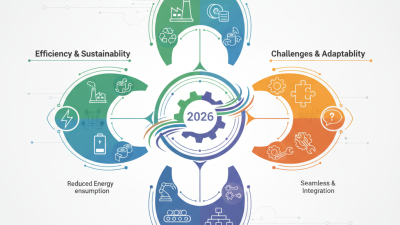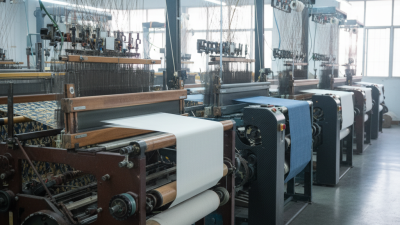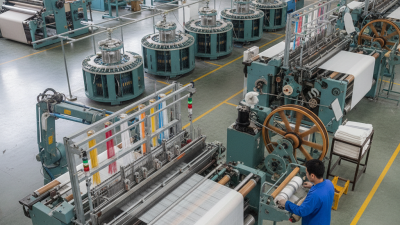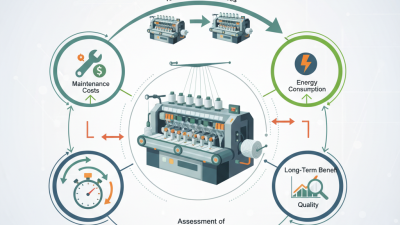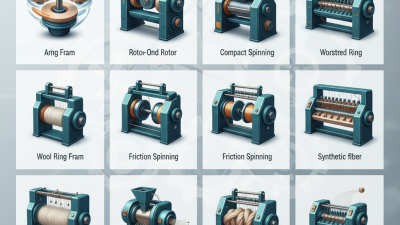
Choosing the best textile industry machines in 2026 requires more than comparing brochures or headline speeds. A reliable decision begins with production goals, fabric types, labor conditions, energy use, and maintenance support. A high-speed loom may appear impressive, yet it can become costly when spare parts arrive slowly or operators lack proper training.
Modern textile plants are combining automated spinning systems, computerized knitting machines, precision looms, digital textile printers, and intelligent inspection equipment. These technologies can improve consistency, reduce material waste, and provide clearer production data. For example, an automated inspection camera may detect a small weave defect before an entire fabric roll is finished. That detail matters.
Sustainability also changes the buying decision. Efficient motors, low-liquor dyeing systems, heat recovery units, and closed-loop process controls can reduce resource consumption. However, “eco-friendly” claims deserve careful checking. Actual performance depends on fabric weight, operating settings, maintenance, and staff behavior. Marketing language can be vague.
This guide evaluates leading machine categories through practical criteria, including output quality, flexibility, safety, energy efficiency, total ownership cost, and technical support. It also considers whether smaller manufacturers can adopt advanced equipment without overextending their budgets. The best machine is not always the newest one. Sometimes, a dependable older system with skilled operators performs better. That is easy to overlook.
Technology keeps changing. Some recommendations may require review as standards, software, and supply chains evolve. Even so, careful comparison can help manufacturers choose equipment that supports stable production, responsible growth, and measurable long-term value.
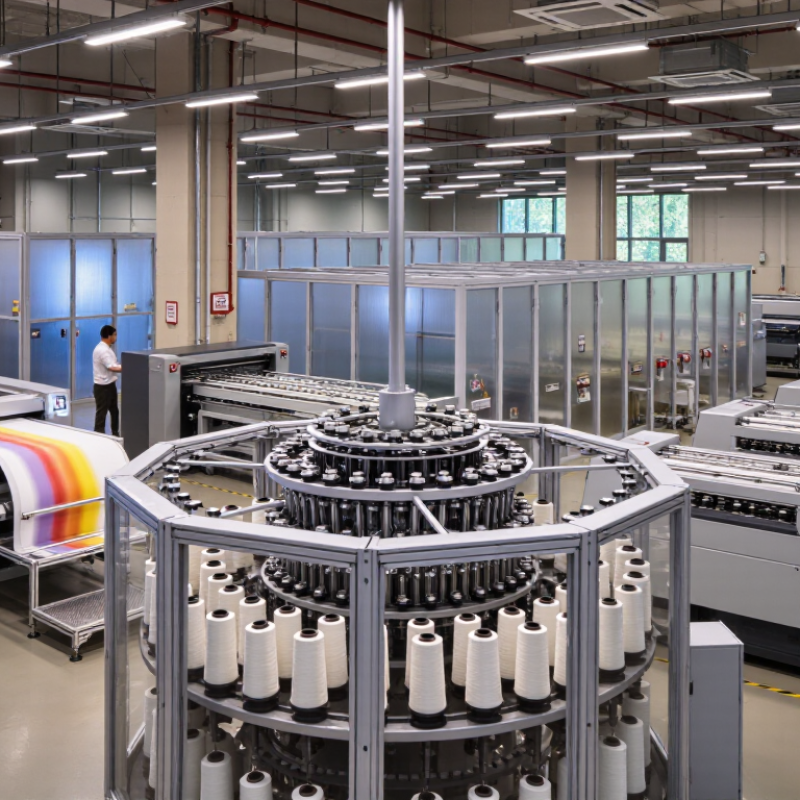
The best textile industry machines in 2026 are not always the fastest. They must match fabric type, production volume, energy targets, and operator skills. Spinning machines convert fibers into consistent yarn with controlled twist and tension. Weaving machines interlace yarns to create stable fabric structures. Knitting machines form loops for flexible garments and technical textiles.
Dyeing machines apply color under controlled temperature, pressure, and chemical conditions. Finishing machines improve softness, shrink resistance, moisture control, or surface appearance. Cutting machines use measured patterns to reduce material waste before sewing.
Automated sewing equipment supports repeatable seams, while inspection systems detect holes, stains, uneven density, and color differences. Small defects become expensive when they reach final packing.
A reliable selection process should examine output quality, maintenance access, energy use, noise, and worker safety. Production teams should study trial samples, service records, and real operating data before purchasing. A machine may promise high speed, yet poor calibration can damage delicate fibers. That matters.
Practical experience on factory floors shows that operator training often affects results as much as machine specifications. Simple controls can prevent costly mistakes. Still, automation is not a perfect answer. Sensors may miss unusual fabric behavior, and software settings require regular review.
Managers should compare performance across several production shifts, not one impressive demonstration. Better decisions come from measured waste, downtime, fabric consistency, and repair frequency.
What Are the Best Textile Industry Machines in 2026?
Choosing the best textile machine in 2026 starts with the production brief, not a glossy specification sheet. A small workshop making 500 cotton shirts weekly needs different equipment from a mill running continuous synthetic yarn. Define fabric type, daily output, operator skill, floor space, and acceptable waste. Measure these numbers for at least four weeks. Estimates often look cleaner than reality.
For cutting, compare blade accuracy, nesting software, changeover time, and dust control. For sewing, assess stitch consistency at actual speed, not only the advertised maximum. A machine producing 1,000 pieces hourly may slow sharply with thick seams or delicate knits. Inspect sample panels under bright light. Uneven tension and skipped stitches appear quickly there. Ask technicians about needle access, lubrication, sensor calibration, and spare-part availability. These details shape uptime more than impressive screens.
Energy use deserves a practical test. Record electricity consumption during warm-up, production, cleaning, and idle periods. Evaluate automation by payback, training time, and error reduction. More automation is not automatically better. In a rural facility, stable controls and local service may matter more than advanced robotics. Request a trial using your own fabric, patterns, and operators. Keep failed samples; they reveal hidden limits. I would also budget for maintenance earlier than planned, because neglected rollers, belts, and sensors quietly damage quality. Reliable selection comes from evidence, not confidence alone.
What Are the Best Textile Industry Machines in 2026?
The best textile machines in 2026 are not always the fastest. They must control waste, energy, and production variation. Textile Exchange’s Materials Market Report 2024 estimated global fiber production at 124 million tonnes in 2023. That scale increases pressure on mills to measure every kilogram.
Spinning machines now need stable drafting, precise tension control, and quick fiber changes. Modern ring-spinning systems suit fine yarns and consistent apparel fabrics. Open-end spinning remains practical for coarser yarns and shorter production runs. ITMF’s International Textile Machinery Shipment Statistics 2024 reported millions of new short-staple spinning positions shipped globally in 2023. The figure shows continued investment, although shipment volume alone does not prove better performance. Operators should check yarn evenness, power use, and maintenance records.
Weaving machines with electronic shedding and shuttle-less insertion deliver speed and pattern accuracy. They also expose weak yarn preparation quickly. Knitting machines are valuable for stretch fabrics, seamless structures, and fast sampling. Circular systems can reduce cutting waste, but poor loop control may create visible lines under bright inspection lights. Textile Exchange expects global fiber production to approach 160 million tonnes by 2030. That forecast supports flexible machinery, especially systems designed for recycled and blended fibers. In practice, the “best” machine may be the one technicians can calibrate reliably at 6 a.m. Not the one with the longest specification sheet.
| Category | Machine Type | Primary Function | Typical Operating Range | Suitable Materials | Main Advantages | Best Application |
|---|---|---|---|---|---|---|
| Spinning | Blowroom Line | Opens, cleans, blends, and feeds staple fibers before carding. | Approximately 800–1,500 kg of fiber per hour, depending on fiber type and cleaning intensity. | Cotton, recycled cotton, and other staple fibers. | Improves fiber blending and removes a significant portion of coarse impurities. | Large-scale staple-fiber spinning preparation. |
| Spinning | Carding Machine | Separates, aligns, and removes short fibers and remaining impurities. | Approximately 80–150 kg per hour; delivery speed commonly reaches 300–600 m/min. | Cotton, viscose, polyester staple, and blends. | Strong influence on sliver evenness, cleanliness, and yarn quality. | The essential preparation stage for ring, rotor, and air-jet spinning. |
| Spinning | Draw Frame | Doubles and drafts slivers to improve linear density and fiber alignment. | Delivery speeds commonly range from 500–1,000 m/min. | Cotton, man-made staple fibers, and blends. | Improves sliver uniformity and reduces mass variation. | High-quality yarn preparation before roving or direct spinning. |
| Spinning | Combing Machine | Removes short fibers and produces a more parallel, cleaner fiber strand. | Approximately 350–550 nips per minute. | Long-staple cotton and premium staple-fiber blends. | Produces smoother, stronger, and more uniform yarns. | Fine-count yarns, premium shirting, luxury knitwear, and high-quality fabrics. |
| Spinning | Ring Spinning Frame | Twists and winds roving into continuous spun yarn. | Typical spindle speeds of approximately 15,000–25,000 rpm. | Cotton, wool, viscose, polyester, and blended fibers. | Broad yarn-count range, excellent yarn strength, and flexible quality control. | Fine and medium-count yarns for apparel, home textiles, and technical fabrics. |
| Spinning | Rotor Open-End Spinning Machine | Produces yarn directly from prepared sliver without a roving stage. | Typical rotor speeds of approximately 80,000–150,000 rpm. | Cotton, recycled fibers, coarse-count blends, and denim fibers. | High productivity, reduced process stages, and good tolerance for shorter fibers. | Denim, towels, workwear, casualwear, and recycled-yarn production. |
| Weaving | Air-Jet Loom | Inserts weft yarn using compressed air. | Approximately 600–1,200 rpm; common working widths are 190–400 cm. | Cotton, polyester, viscose, and lightweight to medium fabrics. | High insertion speed and strong productivity for mass production. | Shirting, bed linen, polyester fabrics, and broad-width home textiles. |
| Weaving | Rapier Loom | Carries weft yarn across the shed using one or two flexible or rigid rapiers. | Approximately 400–800 rpm; common working widths are 190–360 cm. | Cotton, wool, linen, silk, technical yarns, and fancy yarns. | Versatile weft insertion and good control of delicate or heavy yarns. | Fashion fabrics, upholstery, jacquard fabrics, towels, and technical textiles. |
| Weaving | Projectile Loom | Inserts weft yarn using a small projectile propelled through the shed. | Approximately 300–600 rpm; working widths can reach about 190–540 cm. | Heavy cotton, wool, industrial yarns, and wide fabrics. | Suitable for heavy constructions and very wide fabric production. | Heavy upholstery, industrial fabrics, blankets, and wide-width textiles. |
| Knitting | Single-Jersey Circular Knitting Machine | Forms knitted fabric in a continuous tubular structure using one needle bed. | Typical diameters of 24–42 inches and gauges of approximately 18–40 needles per inch. | Cotton, polyester, viscose, elastane blends, and recycled yarns. | High output, continuous production, and soft fabric handle. | T-shirts, underwear, sportswear, casualwear, and lightweight jersey fabrics. |
| Knitting | Double-Jersey Circular Knitting Machine | Produces double-knit structures using two needle beds arranged in a cylinder and dial configuration. | Typical diameters of 24–42 inches and gauges of approximately 16–32 needles per inch. | Cotton, polyester, viscose, wool blends, and elastane-containing yarns. | More stable, thicker, and reversible fabrics than single-jersey machines. | Polo shirts, sweatshirts, structured sportswear, and medium-weight apparel. |
| Knitting | Flat Knitting Machine | Creates shaped or fully fashioned panels with programmable needle selection. | Common needle gauges range from 3 to 18 needles per inch; carriage speeds may reach approximately 1.0–1.5 m/s. | Wool, cashmere, cotton, acrylic, technical yarns, and blended yarns. | Flexible design, three-dimensional shaping, and reduced cutting waste. | Sweaters, collars, cuffs, footwear uppers, and customized knitwear. |
| Knitting | Warp Knitting Machine | Forms fabric from multiple yarn ends fed in the warp direction. | Approximately 1,000–2,500 rpm; common working widths are 140–220 cm. | Polyester, polyamide, elastane, technical yarns, and synthetic blends. | High production speed, dimensional stability, and suitability for engineered structures. | Lingerie, sportswear, mesh, lace, automotive textiles, and industrial fabrics. |
Note: Operating ranges are typical industry values and vary according to fiber properties, yarn count, fabric construction, machine width, gauge, automation level, and production settings.
What Are the Best Textile Industry Machines in 2026?
Advanced Equipment for Textile Dyeing, Printing, and Finishing
Textile mills in 2026 need machines that reduce water, energy, and reprocessing. Textile Exchange’s Materials Market Report 2024 recorded 124 million tonnes of global fiber production in 2023. That volume may reach 160 million tonnes by 2030. Dyeing and finishing equipment must therefore deliver stable quality at higher efficiency.
Low-liquor jet dyeing machines can reduce bath ratios and shorten heating cycles. Digital pigment printers offer precise placement, fewer screens, and faster sampling. For finishing, stenters with heat recovery, infrared pre-drying, and inline moisture sensors improve fabric control. These systems also support repeatable shade matching. UNEP reports that textiles contribute roughly 2–8% of global greenhouse gas emissions, depending on the assessment boundary. The number is wide. That uncertainty deserves attention.
Tips: Compare machines using water per kilogram, energy per kilogram, chemical recovery, and rework rates. Test difficult fabrics before signing a purchase contract. A machine that looks efficient on paper may perform poorly with dense cotton or recycled blends. Keep calibrated sensors and trained operators nearby. Automation cannot repair weak process data.
In practical mill trials, the strongest results usually come from connected equipment rather than one expensive machine. Batch records should show temperature curves, liquor ratios, drying time, and final moisture. Digital printing still needs careful pretreatment. That part is easy to underestimate. Reliability matters more than impressive speed.
In 2026, the strongest textile machinery is not simply the fastest. It is equipment that connects production speed with measurable resource control. Automated cutting systems can read fabric layouts, reduce offcuts, and adjust settings through production software. Modern knitting and weaving machines also monitor tension, temperature, and vibration in real time. Small sensors can prevent large defects.
From my observation of textile production, automation works best when operators understand the data. A machine may stop a line after detecting uneven yarn tension, but workers still need to identify the cause. This balance matters. Fully automated production sounds attractive, yet maintenance teams remain essential. Poorly trained staff can turn advanced equipment into an expensive idle structure. That problem deserves more attention.
Sustainability is becoming a practical engineering target, not just a marketing phrase. Low-liquor dyeing systems, heat-recovery units, and electric motors can reduce water and energy demand. Digital controls also support predictive maintenance, extending machine life and limiting unnecessary replacement. However, efficiency figures differ between factories. Older buildings, unstable power supplies, and mixed fabric inputs can weaken expected results. Future machinery will likely combine artificial intelligence, modular components, and digital product records. The direction is promising, but manufacturers should publish clearer testing conditions. Without reliable data, green claims remain difficult to compare.