
China Top Fuel Oil Heater Manufacturers for Global Buyers
China has become a major sourcing base for Fuel Oil Heater systems used in construction, agriculture, workshops, and industrial facilities. Global buyers now examine more than purchase price. They assess heating output, fuel compatibility, electrical safety, service access, and delivery reliability.
Dan Holohan, a respected hydronic heating educator, has said, “The best heating system is the one you don’t notice.” This idea matters when evaluating Chinese manufacturers. A dependable Fuel Oil Heater should start smoothly, maintain stable heat, and operate without distracting vibration or excessive smoke. Practical details reveal quality. Look for reinforced combustion chambers, protected control panels, clear oil filters, and burners that technicians can adjust safely. Ask about cold-start performance. Ask about spare parts, too.
This guide introduces leading China-based manufacturers for global buyers. It considers factory experience, product engineering, quality controls, export capability, and technical support. Some suppliers offer impressive brochures but limited commissioning help. That weakness can become expensive after installation. A careful review should compare test reports, warranty terms, production capacity, and customer references. Certifications deserve attention, although certificates alone do not prove long-term performance. Field feedback often tells a different story.
No supplier is perfect. Even strong manufacturers may struggle with communication, regional standards, or delayed replacement parts. Buyers should verify every important claim before signing a contract. The right partner combines stable production with honest technical advice. That balance helps a Fuel Oil Heater deliver safer, steadier, and more economical heat across demanding applications.
Fuel Oil Heaters: Definition, Functions, and Industrial Applications
Fuel Oil Heaters: Definition, Functions, and Industrial Applications
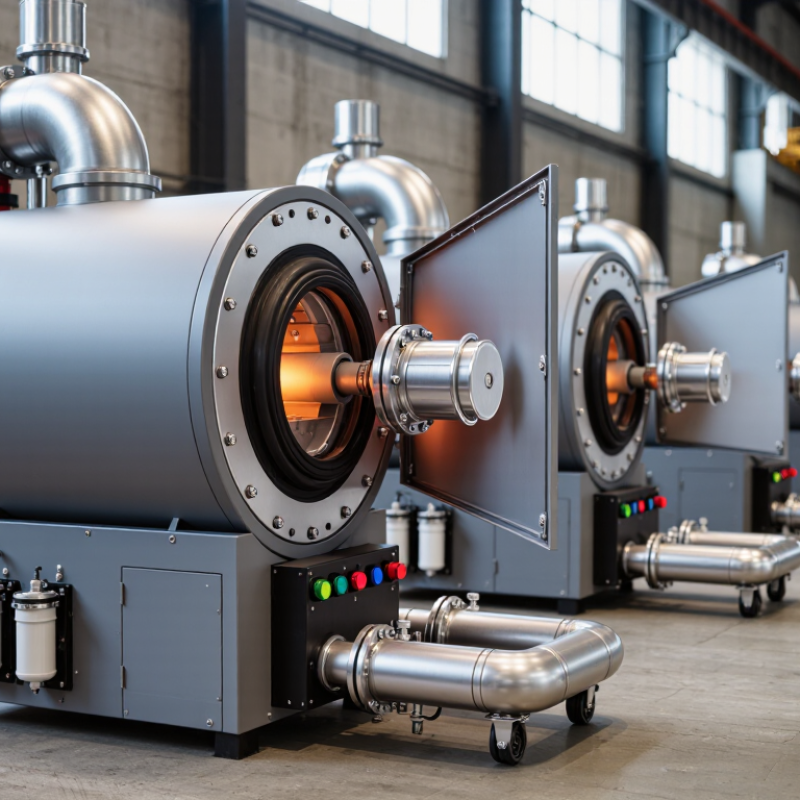
A fuel oil heater burns liquid fuel to create controlled thermal energy. A burner atomizes the oil, mixes it with air, and transfers heat through a chamber or heat exchanger. The heated air, fluid, or thermal oil then supports production. According to the International Energy Agency’s Energy Technology Perspectives 2024, industry consumes about 37% of global final energy. Efficient heat equipment therefore matters.
These heaters support drying, curing, asphalt processing, metal treatment, food production, and warehouse heating. In a coating line, heated air can remove moisture from surfaces within minutes. In a thermal oil system, stable temperatures protect pumps, reactors, and piping. The U.S. Department of Energy reports that process heating represents roughly 51% of energy use in American manufacturing. Poor burner adjustment can waste fuel and create uneven temperatures.
Industrial buyers should examine heat output, fuel viscosity, combustion control, insulation, and maintenance access. Emission performance must match local requirements. A high-capacity unit is not automatically efficient. That assumption often fails. Oversized heaters cycle frequently, while undersized systems struggle during cold starts. Practical testing should include stack temperature, oxygen levels, fuel consumption, and temperature uniformity. The European Commission’s energy-efficiency guidance also emphasizes monitoring and control for industrial thermal systems. Field conditions may expose weaknesses that brochures miss. Reliable selection needs measured load data, verified safety controls, and service planning.
| Data Dimension | Fuel Oil Heater Category | Definition or Operating Principle | Typical Fuel | Common Heat-Transfer Medium | Typical Industrial Temperature Range | Key Functions | Typical Industrial Applications | Important Selection Considerations |
|---|---|---|---|---|---|---|---|---|
| Heater Type | Direct-Fired Air Heater | Burns fuel oil in a combustion chamber and transfers heat directly to the air or process gas. | Diesel, light fuel oil, or kerosene-type fuels | Heated air or process gas | Approximately 50–600°C, depending on design and airflow | Rapid air heating, drying, freeze protection, and space heating | Warehouses, workshops, construction sites, agricultural buildings, and drying systems | Combustion emissions, ventilation, burner control, airflow, and required temperature uniformity |
| Heater Type | Indirect-Fired Air Heater | Combustion gases remain separate from the heated air through a heat exchanger. | Diesel or light fuel oil | Clean heated air | Approximately 40–300°C for many industrial air-heating systems | Provides clean, moisture-free process air without direct flue-gas contact | Food processing, textile production, pharmaceutical areas, paint drying, and enclosed workspaces | Heat-exchanger material, flue design, efficiency, air cleanliness, and condensate control |
| Heater Type | Thermal Oil Heater | Uses a fuel-fired burner to heat circulating thermal oil in a closed-loop system. | Diesel, heavy fuel oil, or other approved liquid fuels | Mineral-based or synthetic thermal oil | Commonly up to 300–350°C at the oil outlet, subject to fluid specification | Supplies stable indirect heat at relatively low system pressure | Asphalt plants, chemical processing, wood products, food production, and industrial ovens | Oil film temperature, pump flow, expansion tank, thermal-fluid compatibility, and safety controls |
| Heater Type | Hot-Water Boiler | Transfers combustion heat to water for circulation through radiators, coils, or process equipment. | Diesel or fuel oil | Hot water | Typically 60–120°C for non-steam heating systems | Provides centralized heating and process-water temperature control | Factories, commercial buildings, district heating, washing systems, and process lines | Operating pressure, water treatment, pump sizing, expansion control, and corrosion protection |
| Heater Type | Steam Boiler | Uses fuel combustion to convert treated water into steam for heating or process use. | Diesel, light fuel oil, or heavy fuel oil | Steam | Usually above 100°C; saturated steam temperature depends on operating pressure | Delivers latent heat for sterilization, cooking, drying, and process heating | Food processing, laundries, hospitals, chemical plants, paper mills, and textile factories | Boiler pressure, water treatment, blowdown, safety valves, burner turndown, and emissions compliance |
| Heater Type | Immersion Heater with Oil-Fired Heating System | Heats a liquid bath or tank indirectly through a heat-transfer surface supplied by a fuel-fired system. | Diesel or industrial fuel oil | Water, thermal oil, cleaning solution, or chemical bath | Approximately 40–250°C, depending on the liquid and tank design | Maintains tank temperature and supports controlled batch heating | Surface treatment, chemical tanks, cleaning equipment, plating lines, and liquid storage | Tank material, liquid compatibility, heat-transfer area, circulation, and over-temperature protection |
| Core Function | Process Temperature Maintenance | Maintains a target temperature by modulating burner output, fuel flow, airflow, or circulation. | Fuel selected according to burner and local regulations | Air, water, steam, or thermal oil | Depends on the process and heat-transfer medium | Improves product consistency, reduces thermal fluctuations, and supports continuous production | Food, chemicals, plastics, rubber, coatings, and building-material production | Temperature sensor accuracy, control response, burner turndown ratio, and process heat load |
| Core Function | Drying and Moisture Removal | Uses heated air or indirect heat to remove moisture from products, materials, or process surfaces. | Diesel, light fuel oil, or other approved liquid fuels | Hot air or thermal oil | Commonly 50–250°C, depending on the material being dried | Shortens drying time and supports controlled moisture content | Grain drying, timber processing, paint curing, textile finishing, and sludge treatment | Air velocity, humidity, residence time, material sensitivity, exhaust management, and fire protection |
| Performance Indicator | Thermal Efficiency | The proportion of fuel energy converted into useful process heat rather than lost through exhaust or radiation. | Varies with fuel quality and burner setup | Applicable to all heat-transfer media | Not a temperature rating; it is a performance measure | Helps estimate fuel consumption and operating cost | All industrial heating systems | Combustion tuning, insulation, heat-exchanger cleanliness, exhaust temperature, and load matching |
| Safety and Compliance | Burner Management and Protection | Combines flame monitoring, ignition control, fuel shutoff, pressure protection, and temperature limiting. | Fuel-specific burner system | System-dependent | Protection limits are defined by the equipment design and applicable standards | Reduces risks from flame failure, overheating, fuel leakage, and abnormal pressure | All commercial and industrial fuel-oil heating installations | Emergency stop functions, certified components, ventilation, maintenance access, and local installation codes |