How to Choose Carbon Steel Seamless Tubes for Your Needs?
Choosing the right carbon steel seamless tubes can be a complex task. With various options available, it is crucial to understand how to select the best fit. Renowned industry expert, John Smith, emphasizes, "The right choice in carbon steel seamless tubes can make all the difference in performance and safety."
These tubes are widely used in construction, automotive, and manufacturing. Factors like size, thickness, and chemical composition significantly influence their suitability for specific applications. Understanding these parameters ensures optimal performance and longevity. However, not all suppliers guarantee quality. This can lead to unexpected challenges and additional costs.
When evaluating options, consider aspects like tensile strength and corrosion resistance. Gathering data on different suppliers is essential, yet often overlooked. Many rush through this process, impacting their final decision and project outcomes. The importance of research cannot be overstated. A well-informed choice will minimize issues down the line and enhance overall reliability.
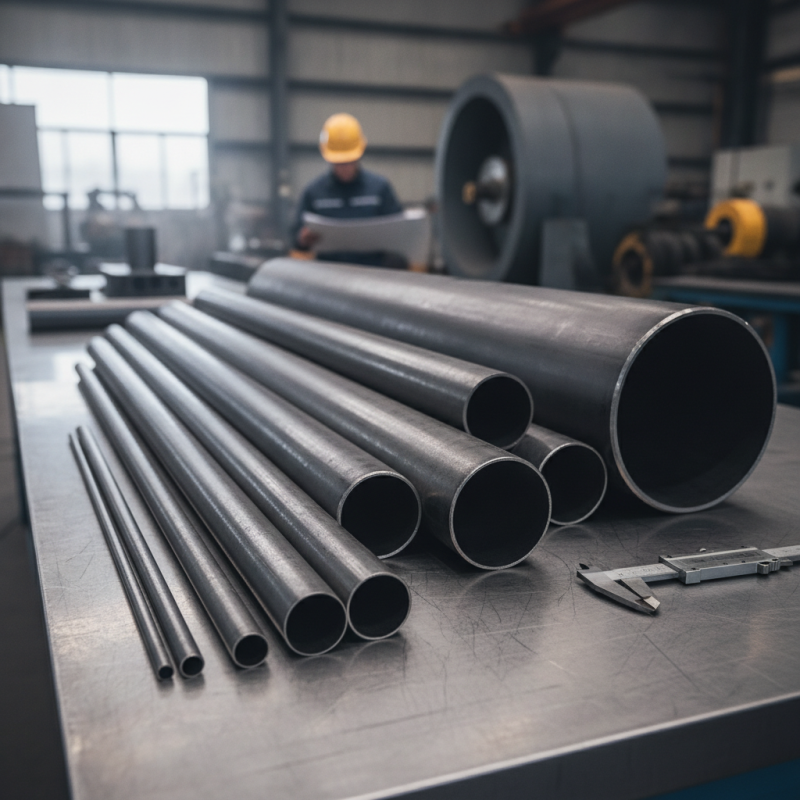
Understanding the Basics of Carbon Steel Seamless Tubes
Carbon steel seamless tubes are essential in many industries. These tubes are known for their strength and durability. They are widely used in construction, automotive, and pipeline applications. According to a 2022 report by the World Steel Association, the demand for seamless tubes made from carbon steel is increasing due to their superior performance under high pressure.
Manufacturers often consider several factors when producing these tubes. The composition of carbon steel influences the final product's strength and ductility. For example, low-carbon steel typically offers better weldability. In contrast, high-carbon steel can withstand high stress and serves well in heavy machinery. Moreover, seamless tubes have a uniform structure. This gives them an advantage over welded tubes. Their integrity is higher, reducing the likelihood of failures.
However, selecting the right seamless tubes can be challenging. Understanding the application and operating conditions is crucial. An inappropriate choice may lead to failures and costly repairs. Many engineers rely on technical specifications to make informed decisions. They analyze factors like temperature ranges, pressure levels, and environmental conditions. Despite their apparent advantages, seamless tubes require careful handling and alignment during installation. This step is often overlooked, leading to operational issues.
Key Factors to Consider When Selecting Carbon Steel Seamless Tubes
When choosing carbon steel seamless tubes, several factors come into play. One critical aspect is the steel grade. According to industry reports, grades like ASTM A106 and A53 are commonly used in various applications. Each grade has distinct properties suited for specific conditions. ASTM A106 is ideal for high-temperature services, while A53 is often used for structural purposes. Understanding the material's composition can enhance project longevity.
Another vital factor is the tube dimensions. Proper sizing ensures compatibility with existing systems. Diameter and wall thickness are crucial for maintaining pressure and flow rates. A report by the American Society for Testing and Materials indicates that mismatched sizes can lead to failures or leaks, costing companies significant downtime and repair expenses.
Finally, quality assurance cannot be overlooked. It’s essential to verify that the tubes meet the necessary standards. Many manufacturers utilize non-destructive testing methods to ensure integrity. However, not all tests are equally effective, and some may still miss defects. Always seek third-party certifications for peace of mind. Selecting seamless tubes demands careful consideration of these factors to avoid future complications.
Applications of Carbon Steel Seamless Tubes in Various Industries
Carbon steel seamless tubes are vital in many industries due to their mechanical properties and versatility. In the oil and gas sector, these tubes are essential for transporting fluids under extreme conditions. Industry reports suggest that the demand for seamless tubes in this sector will grow by over 5% annually through 2026. The high strength-to-weight ratio makes these tubes ideal for offshore structures.
In the construction industry, carbon steel seamless tubes support various structural applications. They are used for critical load-bearing elements. Data indicates that seamless tubes can offer 20% more strength than welded tubes. This strength is crucial in skyscrapers and bridges. However, inconsistent manufacturing processes can lead to quality issues. It’s important to choose reliable suppliers who adhere to strict quality standards.
The automotive industry also benefits from carbon steel seamless tubes. They are used in making frames and other components that require both rigidity and flexibility. Reports show that 30% of new vehicles now incorporate these tubes. Yet, selecting the right specification for different automotive applications can be challenging. Understanding the material properties is essential to ensure safety and performance.
How to Choose Carbon Steel Seamless Tubes for Your Needs? - Applications of Carbon Steel Seamless Tubes in Various Industries
| Application Industry | Typical Uses | Common Specifications | Advantages |
| Oil and Gas | Pipelines, drilling tubes | ASTM A106, ASTM A53 | High strength, good weldability |
| Construction | Structural tubes, scaffolding | ASTM A500, A53 | Durability, cost-effective |
| Automotive | Chassis, exhaust systems | ASTM A573, AISI 1010 | Lightweight, high tensile strength |
| Manufacturing | Heat exchangers, boilers | ASTM A192, A213 | Excellent thermal conductivity, high pressure resistance |
| Aerospace | Fuel lines, structural components | ASTM A108, A269 | Lightweight, corrosion resistant |
Comparing Different Grades of Carbon Steel for Seamless Tubes
When selecting carbon steel seamless tubes, understanding the different grades is crucial. Each grade offers unique properties that cater to various applications. For instance, Grade A106 is often preferred for high-temperature service. It excels in strength and weldability. Yet, it may not perform well in highly corrosive environments.
On the other hand, Grade A53 is commonly used for structural purposes. This grade provides decent tensile strength and is less costly. However, it may lack the temperature resistance found in A106. It's essential to weigh these trade-offs. Transitioning to a better grade can lead to higher costs but can enhance performance.
Additionally, grade selection depends on specific requirements. Not all applications demand the highest grade available. Assessing factors like pressure, temperature, and environment plays a vital role. Sometimes, an intermediate grade might suffice. Understanding these nuances can help avoid costly mistakes. Each project may need reevaluation, as what worked before might not apply now. Balancing cost and performance is vital to making informed decisions.
Maintenance and Care for Carbon Steel Seamless Tubes
Maintaining carbon steel seamless tubes is crucial for their longevity and performance. Regular inspection is necessary to detect any signs of wear or corrosion. Pay attention to any areas that show discoloration or rust. These could be early indicators of more significant issues.
Tips: Keep the tubes clean. Use a mild detergent and water. Avoid harsh chemicals that might damage the surface.
Proper storage is equally important. Store the tubes in a dry environment, away from moisture. If possible, use a protective coating to prevent rust. However, ensure this coating is compatible with the tube material.
Tips: Use desiccants in storage areas to control humidity. Check regularly for leaks or water accumulation.
Always follow the manufacturer's guidelines for maintenance. While many standards exist, some tubes may have specific requirements. Addressing any issues promptly can prevent costly repairs in the future. Remember to reflect on your maintenance practices. Are they sufficient for your needs? Adjust as necessary.