China Top Spunlace Fabric Suppliers How to Choose?
China has become a major sourcing base for Spunlace Fabric, serving hygiene, medical, filtration, wipes, and industrial applications. Yet choosing a supplier is not simply a price comparison. Factory experience, fiber selection, web formation, bonding strength, and finishing control can affect every roll. A fabric that looks smooth under warehouse lights may tear during converting or release excess lint on a production line. Small details matter.
This guide examines how buyers can evaluate China’s top Spunlace Fabric suppliers with practical evidence. Look for traceable raw materials, consistent basis weight, controlled moisture, clean production areas, and documented quality procedures. Ask for recent test reports, production samples, batch records, and clear tolerances. Certifications can support credibility, but they should match the product and destination market. A polished website is not proof of stable manufacturing. Independent audits, customer references, and a transparent complaint process offer stronger signals.
Real purchasing decisions also require careful communication. Explain the intended use, roll width, tensile requirements, absorbency target, packaging, and annual volume before requesting a quotation. Compare delivered cost, not only the factory price. Sampling is essential. Even experienced buyers can overlook differences between laboratory results and high-speed converting performance. That weakness deserves attention. Suppliers may also recommend specifications that favor production efficiency rather than your actual application. A reliable partner will explain trade-offs, admit limitations, and adjust when evidence changes. By combining technical review, factory verification, and trial orders, buyers can reduce risk and select a China-based supplier with dependable long-term value.
Map China’s Spunlace Supplier Base with Capacity and Export Data
China Top Spunlace Fabric Suppliers: How to Choose?
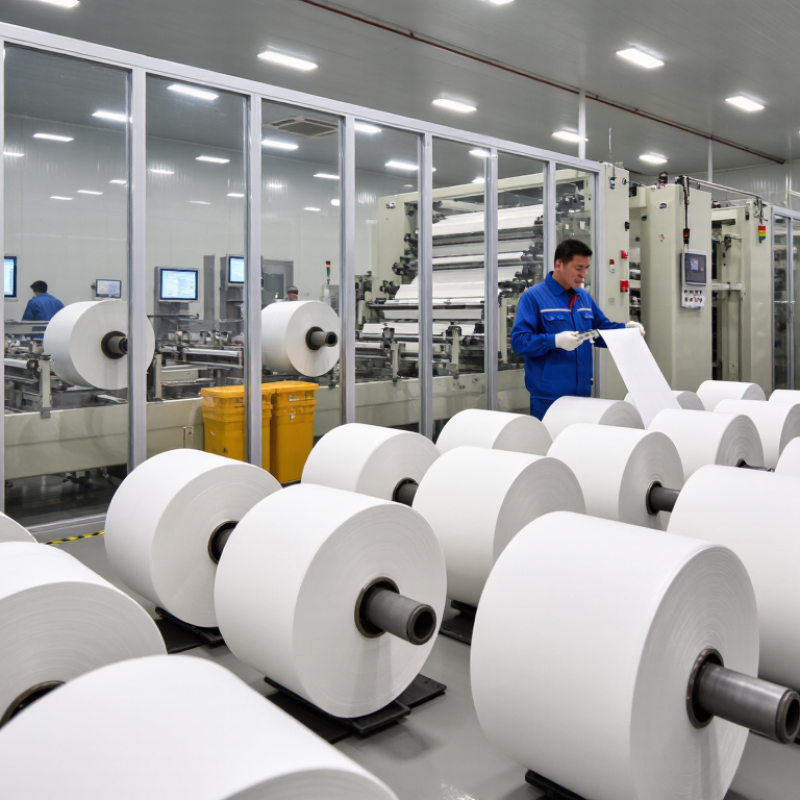
China’s spunlace supplier base is concentrated in coastal manufacturing regions, where logistics, labor, and converting services are accessible. Jiangsu, Zhejiang, Guangdong, and Shandong host many nonwoven producers. Their capabilities differ sharply. Some operate one 2.5-meter line, while larger factories manage several lines above four meters. Capacity claims require careful checking.
Export data adds useful evidence. Review customs records, shipment frequency, destination markets, and product descriptions over twelve months. Repeated exports suggest operational stability, but records may combine several product types under broad tariff classifications. Ask suppliers for monthly output, unused capacity, lead times, and recent inspection reports. A factory producing 8,000 tons annually may not reserve enough volume during seasonal peaks.
Details matter here.
During supplier audits, compare line width, fiber blend, fabric weight, and roll diameter with the quotation. Check whether production is fully internal or partly outsourced. Request samples from different production dates, not only a polished showroom roll. Export documentation, test reports, and traceable batch numbers support reliability. Still, no dataset is perfect. Customs records can lag, and reported capacity may reflect theoretical output rather than sellable fabric. I would score suppliers across capacity, export consistency, quality controls, and response speed, then verify the weakest assumption before signing a supply agreement.
Compare 30–120 GSM Fabrics Using ISO 9073 Performance Tests
China Top Spunlace Fabric Suppliers: How to Choose?
Comparing 30–120 GSM spunlace fabric requires more than touching a sample. Start with ISO 9073 tests. ISO 9073-1 measures mass per unit area, while ISO 9073-2 checks thickness. These results reveal whether a 40 GSM roll is genuinely light or simply inconsistent. ISO 9073-3 measures tensile strength and elongation in both machine and cross directions. A stronger fabric is not always better. Excessive stiffness can reduce comfort and drape.
For wipes, gowns, and absorbent sheets, request ISO 9073-6 absorption data. ISO 9073-10 can help assess lint and loose fibre release. Compare test conditions, sample size, and conditioning time. Otherwise, supplier figures may look precise but remain difficult to compare. The INDA Global Nonwovens Industry Outlook 2024–2029 places global nonwoven production at roughly 14 million tonnes in 2023, showing the scale of this supply market. However, large capacity does not prove stable quality. In factory audits, I would check roll edges, splice frequency, moisture, and GSM variation across the roll.
Tips: Ask for three production-lot samples, not one showroom piece. Test 30, 60, 80, and 120 GSM grades under identical ISO procedures. Record dry and wet tensile results. A 120 GSM fabric may survive handling better, while 30 GSM offers lower material use. That trade-off needs evidence. One practical weakness remains: laboratory results may not predict every converting machine. Run a short production trial before approving the supplier.
Verify OEKO-TEX, GRS, FDA, and EN 13795 Compliance
Choosing a Chinese spunlace fabric supplier requires more than checking GSM, softness, or factory photos. Ask for current certificates and scope pages. OEKO-TEX documents should identify the exact article, color, production site, and validity period. A report without matching product details is weak evidence. Check restricted-substance limits, not only the logo. GRS verification should cover recycled input, processing sites, and chain of custody. Textile Exchange’s 2024 Materials Market Report recorded 124 million tonnes of global fiber production in 2023. Recycled fibers represented 7.6%. Traceability is commercially important.
For food-contact products, request evidence for the intended use under applicable FDA requirements. FDA compliance is not universal approval for every spunlace application. Ask for migration data, composition records, supplier declarations, and lot-control procedures. For medical gowns and drapes, EN 13795 review should include laboratory results, barrier performance, cleanliness, linting, and relevant microbial data. Confirm the test method and fabric construction. “Medical grade” is not enough.
Compare certificate numbers with issuer databases, audit dates, test lots, and factory addresses. A reliable supplier should explain failed tests and corrective actions. That conversation matters. Request a retained sample before bulk production, because absorbency and wet strength can change after finishing. Reports may be accurate yet incomplete. Recheck every color and final production site. This slower step reduces risk, but it cannot remove every uncertainty.
Assess MOQ, Lead Time, Capacity, and 2024 Price Benchmarks
China Top Spunlace Fabric Suppliers: How to Choose?
Supplier selection should begin with measurable capacity, not attractive samples. Smithers’ 2024 nonwovens outlook estimates global demand at more than 14 million tonnes annually, increasing pressure on stable production. Ask for monthly spunlace output, active production lines, and recent utilization rates. A supplier offering 500 tonnes monthly may struggle with a sudden 80-tonne order. Check whether the quoted capacity includes all fabric grades.
MOQ and lead time directly affect cash flow. For standard polyester or viscose spunlace, a practical 2024 China purchasing benchmark was about US$1.45–2.40 per kilogram. Cotton, bamboo, and specialty finishes often reached US$2.10–3.80 per kilogram. These are working ranges, not fixed market prices. INDA’s Global Nonwoven Fabrics Industry Outlook highlights changing raw-material costs and regional supply differences. Request separate pricing for fabric, finishing, packaging, and freight. Standard orders may require 7–15 days, while customized widths or embossing can take 20–35 days.
Tips: Confirm MOQ by color and specification. Request a roll map and weight report. Test three rolls, not one. A low MOQ can hide a higher unit price. My own caution is simple: supplier promises often sound precise, but production schedules remain uncertain. Put tolerance limits, inspection rules, and delay remedies into the purchase agreement. Compare delivered cost, not only the factory quotation.
China Spunlace Fabric Supplier Selection Benchmarks, 2024
The chart shows indicative 2024 industry benchmark midpoints for common spunlace fabric categories in China. MOQ is measured in tonnes per order, lead time in calendar days, production capacity in thousand tonnes per year, and price in USD per kilogram. Actual quotations vary by fiber blend, basis weight, finishing, packaging, certification, and order volume.
Rank Suppliers with a Weighted 100-Point Evaluation Scorecard
China Top Spunlace Fabric Suppliers: How to Choose?
A weighted 100-point scorecard makes supplier comparisons more practical than price alone. Score product consistency at 25 points, including basis weight, tensile strength, softness, and absorbency. Check three production lots, not one attractive sample. Small differences matter.
Give technical capability 20 points. Review fiber selection, web formation, hydroentanglement control, and finishing accuracy. Quality management receives 15 points, based on inspection records, test methods, corrective actions, and traceability. Capacity and delivery reliability deserve 15 points. Ask for monthly output, realistic lead times, and emergency planning. Promises are not evidence.
Allocate 10 points to sustainability and material traceability, including recycled content records and wastewater controls. Communication and technical support receive 10 points. Test response speed with a detailed specification sheet. Keep price at only 5 points. A cheap roll can create higher cutting waste and production delays. An on-site visit can reveal storage humidity, roll protection, and labeling practices. Independent laboratory testing adds credibility. References from comparable applications also help. I would adjust the weights for medical, hygiene, filtration, or industrial use. The scorecard is useful, but it is not perfect. Supplier performance can change after approval. Recheck critical indicators every quarter.