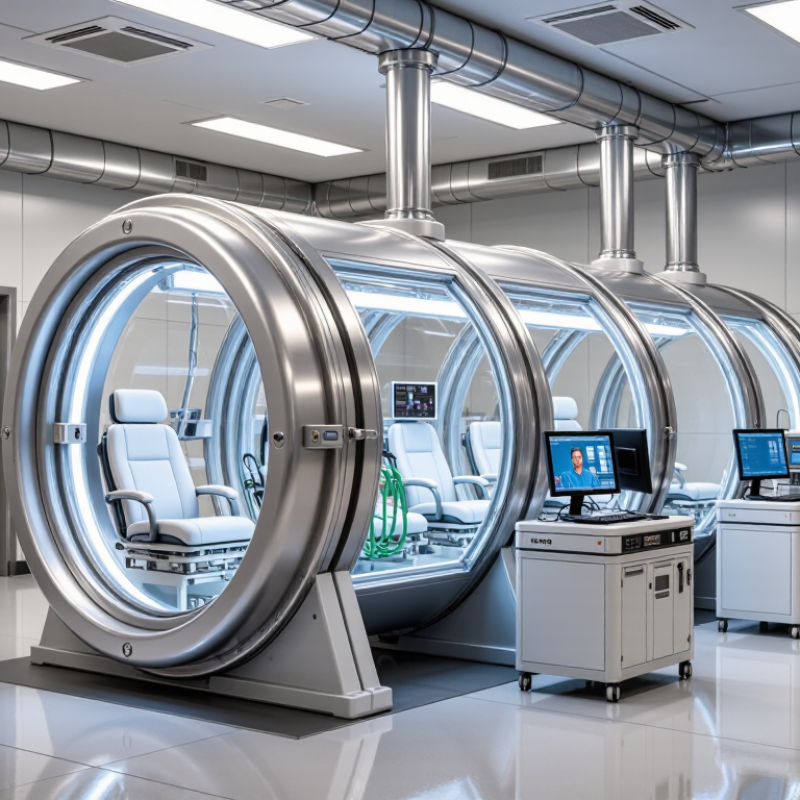
How to Choose a Perry Hyperbaric Chamber for Global Buyers

Choosing a Perry Hyperbaric Chamber requires more than comparing prices, dimensions, or delivery dates. Global buyers must connect clinical goals with engineering evidence, regulatory expectations, and long-term service support. A chamber may look impressive on a specification sheet. Real performance depends on oxygen delivery, pressure control, monitoring systems, and operator training.

Hyperbaric physician Dr. Eric P. Kindwall offered a practical principle: “The chamber is the heart of the hyperbaric facility.” That idea still matters. Buyers should confirm whether a monoplace or multiplace Perry Hyperbaric Chamber suits their patient volume and treatment model. They should review working pressure, treatment capacity, visibility, communication systems, emergency procedures, and fire-safety design. Ask for certification records. Request installation requirements. Check local approval pathways before signing a purchase agreement.

Details often reveal the real value. Measure door access, ceiling height, electrical capacity, ventilation, and backup power. Consider the distance to Perry’s authorized service network. Spare parts availability matters. So does technician response time. A chamber can become an expensive obstacle when maintenance planning is weak.

The decision is not always perfectly clear. A larger chamber may support growth, yet require more space, staff, and capital. A compact model may simplify installation, but limit future demand. Buyers should compare documented operating costs, training hours, warranty terms, and lifecycle support. Independent clinical and engineering review is wise. Marketing claims need verification. That extra review may slow the purchase. It can prevent a costly mistake.

How to Choose a Perry Hyperbaric Chamber for Global Buyers

Define Perry Hyperbaric Chamber Types and Intended Uses

Choosing a hyperbaric chamber begins with defining its type and intended use. A monoplace chamber treats one person at a time. It usually fits hospitals, specialist clinics, and controlled medical programs. A multiplace chamber accommodates several patients with a trained attendant inside. This design supports group treatment and complex clinical monitoring.

Mild portable chambers operate at lower pressures and often use air rather than medical oxygen. They may suit supervised wellness programs, but they should not be confused with hospital-grade hyperbaric oxygen therapy. Intended use matters more than appearance. A clear acrylic shell, compact footprint, or attractive control panel does not prove clinical suitability.

For global buyers, examine pressure limits, oxygen delivery, emergency release systems, monitoring equipment, and service support. Confirm that the chamber meets applicable medical-device requirements in the destination market. Operators need documented training, maintenance procedures, and patient screening protocols. A useful question is simple: who will supervise every session?

A common purchasing mistake is treating all chambers as interchangeable. They are not. A chamber designed for routine medical treatment may be excessive for a supervised wellness setting. A portable model may be unsuitable for patients requiring continuous clinical observation. Specifications can also look impressive while hiding weak after-sales support. That detail deserves uncomfortable attention. Insist on transparent test records, realistic operating costs, and a written response plan for power loss, oxygen faults, or patient distress.

Assess Chamber Capacity, Pressure Range, and Treatment Features

For global buyers, chamber capacity is more than a dimension on a brochure. It determines patient comfort, staff movement, cleaning time, and daily treatment volume. A single-person chamber may suit clinics with limited space. Multi-place systems support assisted care and emergency access, but they require stronger ventilation, wider doors, and more complex evacuation planning. Capacity shapes workflow. Check the numbers.

The pressure range deserves careful comparison. UHMS guidance defines hyperbaric oxygen therapy as breathing oxygen at pressures above 1 atmosphere absolute, while many clinical protocols operate around 2.0–3.0 ATA. A chamber should reach the intended treatment pressure steadily, hold it accurately, and provide readable monitoring. ASME PVHO-1 safety requirements are also relevant for pressure vessels used for human occupancy. Do not confuse a higher maximum pressure with better clinical value.

Treatment features can improve consistency. Look for oxygen concentration monitoring, two-way communication, temperature control, alarms, and clear emergency procedures. The 2023 Global Hyperbaric Oxygen Therapy Devices Market report projects continued growth through the decade, reflecting wider adoption and increasing equipment choices. Market forecasts are useful, but they are not clinical proof. My caution is simple: impressive automation may still fail without trained operators, maintenance records, and local service support. Check real access to spare parts. That detail is often underestimated.

Compare Safety Systems, Certifications, and International Compliance

Choosing a hyperbaric chamber for international use requires more than comparing pressure ratings. The ISO Survey 2023 recorded over 30,000 ISO 13485 certificates worldwide, yet certification alone does not prove product safety. Ask for the certificate scope, issuing body, expiry date, and covered manufacturing site. Check whether the chamber follows IEC 60601-1 for electrical safety, IEC 60601-1-2 for electromagnetic compatibility, and ISO 14971 for risk management.

Look closely at the safety architecture. A practical inspection should include pressure relief valves, oxygen concentration monitoring, fire-resistant materials, emergency exhaust controls, and a clearly visible alarm panel. Door seals should close evenly, without forcing the handle. Test records should show calibration dates for gauges, sensors, and emergency controls. The Undersea and Hyperbaric Medical Society guidance also emphasizes trained operators, documented procedures, and suitable patient monitoring. Equipment cannot replace staff competence.

International compliance is often less simple than expected. The WHO Global Report on Medical Devices identifies more than two million medical device types worldwide, creating varied registration and labeling requirements. Confirm local approval, electrical plug standards, language rules, import documents, and post-market reporting duties. A CE mark, FDA clearance, or other national authorization may not transfer automatically across borders. I would treat paperwork as a starting point, not proof. A rushed checklist can miss a weak service network, unavailable spare seals, or poor emergency training. That matters most after installation.

Evaluate Installation, Maintenance, Training, and After-Sales Support

Choosing a Hyperbaric Chamber for Global Buyers

Evaluate Installation, Maintenance, Training, and After-Sales Support

Installation begins with the site, not the equipment. Measure doorways, ceiling height, floor strength, ventilation, and electrical capacity before ordering. A detailed site survey can prevent expensive changes later. Check whether local authorities require inspections, permits, or certified technicians. Requirements differ across countries and regions.

Maintenance planning should be equally practical. Ask for service intervals, replacement-part availability, and clear troubleshooting procedures. Request maintenance records with dates, pressure checks, and technician signatures. Training should cover daily operation, emergency procedures, cleaning, patient communication, and shutdown steps. Keep sessions hands-on. Written manuals help, but operators still need supervised practice.

Ask how quickly support responds across time zones. Confirm the communication channels, spare-parts process, warranty limits, and remote diagnostic options. A reliable supplier should provide named contacts and realistic response times, not vague promises. Verify the training credentials of service staff where possible. Some buyers focus too heavily on the purchase price. That can be a costly mistake. I have also seen teams underestimate staff turnover. A refresher plan may be necessary. No installation is perfect on the first attempt, so document problems and improve the operating checklist after real use.

Calculate Total Ownership Costs and Select the Right Global Supplier

Choosing a hyperbaric chamber for international use requires more than comparing the purchase price. Calculate the total ownership cost over five to ten years. Include freight, customs handling, site preparation, electrical upgrades, installation, training, insurance, maintenance, and replacement parts. A chamber priced lower may need costly local modifications. Ask for a detailed quotation with currency, delivery terms, warranty limits, and expected service response times.

Tips: Request references from facilities in climates similar to yours. Confirm technician qualifications and remote-support hours. Check whether critical components are available in your region. Review pressure ratings, monitoring systems, ventilation, emergency procedures, and cleaning requirements with an independent safety professional. Local certification may also affect commissioning time and costs. Treat every supplier claim as a question to verify.

A reliable global supplier should provide clear technical documents, user training, preventive-maintenance schedules, and traceable quality records. Compare downtime risks, not only equipment prices. One overlooked issue is staff turnover; repeated training can quietly increase annual expenses. Currency changes and shipping delays can also disrupt budgets. A spreadsheet helps, but it may still miss lost revenue during repairs. Build a realistic reserve for unexpected service work. Speak with current operators, inspect support processes, and document every assumption before signing.

How to Choose a Perry Hyperbaric Chamber for Global Buyers - Calculate Total Ownership Costs and Select the Right Global Supplier
The figures below are planning benchmarks for international buyers. Actual costs depend on chamber capacity, treatment protocol, country, building conditions, local regulations, shipping distance, taxes, and supplier scope.
Evaluation Area Data Dimension Planning Benchmark or Example Calculation or Verification Method Buyer Decision Guidance
A. Capital Cost and Site Preparation
Chamber purchase Indicative equipment price Approximately USD 85,000–250,000 for a multi-place clinical hyperbaric chamber, excluding taxes and site work. Request a line-item quotation showing the chamber, control system, oxygen-delivery equipment, monitoring equipment, accessories, and warranty scope. Compare equivalent specifications, not only the headline price.
Facility preparation Room construction and utilities Approximately USD 10,000–40,000 for structural work, electrical capacity, ventilation, fire protection, flooring, access routes, and medical-gas connections. Obtain a site survey and confirm room dimensions, floor loading, ceiling height, access width, and utility requirements before ordering. Make the supplier responsible for written site requirements.
International logistics Freight, insurance, and handling Typically 3%–12% of equipment value, depending on destination, shipment volume, Incoterms, port handling, inland transport, and insurance. Compare door-to-door landed cost rather than the factory or port price. Clarify who pays customs clearance, port storage, local delivery, and unloading.
Installation Assembly, testing, and commissioning Approximately USD 8,000–25,000, excluding major building modifications and travel-related delays. Confirm the number of technicians, installation duration, acceptance tests, commissioning documents, and local support arrangements. Use a signed acceptance protocol before final payment.
Training Operator and clinical training Approximately USD 2,000–8,000 for initial training, depending on trainee numbers, travel, language, and course duration. Verify that training covers operating procedures, emergency response, fire safety, patient screening, cleaning, and preventive maintenance. Require competency records and refresher-training options.
B. Five-Year Total Ownership Cost Example
Initial equipment Example purchase price USD 150,000 Illustrative mid-range equipment price used for the five-year model. Replace this value with the supplier's comparable quotation.
Initial logistics Freight and insurance assumption USD 10,000 Example assumption equal to approximately 6.7% of the equipment price. Recalculate using the destination-specific landed-cost quotation.
Site preparation Facility preparation assumption USD 20,000 Includes basic construction, electrical work, ventilation, and safety preparation. Validate through a local contractor's written estimate.
Installation Commissioning assumption USD 15,000 Includes installation supervision, functional testing, and commissioning documentation. Check whether travel, accommodation, taxes, and overtime are included.
Training Initial training assumption USD 5,000 Includes initial operator training and basic emergency-procedure instruction. Confirm the number of included trainees and training days.
Maintenance Preventive maintenance assumption USD 45,000 over 5 years Calculated as 6% of USD 150,000 per year for five years. Request a fixed-price service plan and identify excluded parts and labor.
Utilities Power, ventilation, and gas-related operating cost USD 12,500 over 5 years Illustrative assumption of USD 2,500 per year; actual cost depends on treatment volume and local utility prices. Use local tariffs and expected annual treatment hours for the final calculation.
Consumables Cleaning materials, filters, seals, and minor supplies USD 5,000 over 5 years Illustrative allowance of USD 1,000 per year, excluding major component replacement. Ask for recommended replacement intervals and approved equivalent parts.
Five-year ownership cost Illustrative five-year TCO USD 262,500 150,000 + 10,000 + 20,000 + 15,000 + 5,000 + 45,000 + 12,500 + 5,000 Use TCO to compare proposals with different service, logistics, and warranty scopes.
C. Technical, Safety, and Regulatory Verification
Pressure performance Rated operating pressure and test pressure Confirm the intended treatment pressure range, design pressure, pressure test procedure, and applicable local requirements. Review the technical file, pressure-vessel documentation, test certificates, and factory acceptance records. Do not rely on marketing pressure claims without supporting documentation.
Oxygen management Oxygen delivery and concentration control Verify delivery method, oxygen concentration monitoring, alarms, ventilation, and emergency oxygen procedures. Request operating limits, alarm settings, maintenance intervals, and training records. Match the system to local medical-gas and fire-safety requirements.
Emergency systems Emergency depressurization and patient communication Confirm emergency release, internal and external communication, backup power, fire response, and patient monitoring provisions. Witness a documented emergency drill during commissioning. Make emergency functionality a condition of acceptance.
Documentation Technical and quality documentation Obtain user manuals, service manuals, drawings, spare-parts lists, risk documentation, certificates, and software records where applicable. Check that documents are available in the required language and identify the revision number and document owner. Incomplete documentation increases compliance and downtime risk.
Local compliance Country-specific approval pathway Requirements may include medical-device registration, pressure-vessel approval, electrical certification, fire approval, building permits, and occupational-safety review. Obtain written confirmation from the local authority, qualified consultant, or authorized importer. Confirm regulatory responsibility before signing the purchase contract.
D. Global Supplier Selection Scorecard
Product suitability Capacity, configuration, and clinical workflow Recommended weighting: 20% Score chamber capacity, patient access, treatment modes, monitoring, cleaning workflow, and upgradeability. Reject options that cannot support the planned treatment volume.
Safety and quality Risk controls and manufacturing quality Recommended weighting: 20% Review design controls, inspection records, traceability, testing, quality procedures, and corrective-action history. Safety evidence should outweigh a low purchase price.
Regulatory support Documentation and market-entry assistance Recommended weighting: 15% Evaluate support for registration, customs documentation, local inspections, labeling, and language requirements. Prefer suppliers with a clearly assigned compliance contact.
After-sales service Response time, parts, and technical support Recommended weighting: 15% Verify service coverage, remote diagnostics, engineer availability, spare-parts lead times, and escalation procedures. Set maximum response and restoration times in the contract.
Warranty Coverage and exclusions Recommended minimum target: 12 months; longer coverage may be available by contract. Check coverage for the pressure vessel, controls, compressors, sensors, software, labor, travel, and replacement parts. Compare warranty value, not only warranty duration.
Delivery capability Production schedule and project management Typical planning window: 4–12 months, depending on customization, approvals, and site readiness. Request a milestone schedule covering design approval, manufacturing, factory testing, shipment, installation, and acceptance. Use milestone payments linked to objective deliverables.
Commercial transparency Quotation clarity and payment risk Require a complete quotation in a single currency with tax, freight, installation, training, service, and exclusions shown separately. Compare at least three technically equivalent offers using the same scope-of-supply checklist. Avoid decisions based solely on the lowest initial quotation.
Supplier stability Long-term support capability Evaluate installed-base references, financial continuity, service network, parts availability, and product lifecycle plans. Request verifiable customer references in comparable countries and operating environments. Prioritize continuity of support over short-term discounts.
Recommended decision rule: Select the supplier with the strongest documented safety, regulatory, service, and five-year TCO profile—not necessarily the lowest initial purchase price. All monetary figures are illustrative planning values in United States dollars and should be replaced with destination-specific quotations.
Go to Top
Translate »