Top Tips for Successful Auto Parts Investment Casting Strategies?
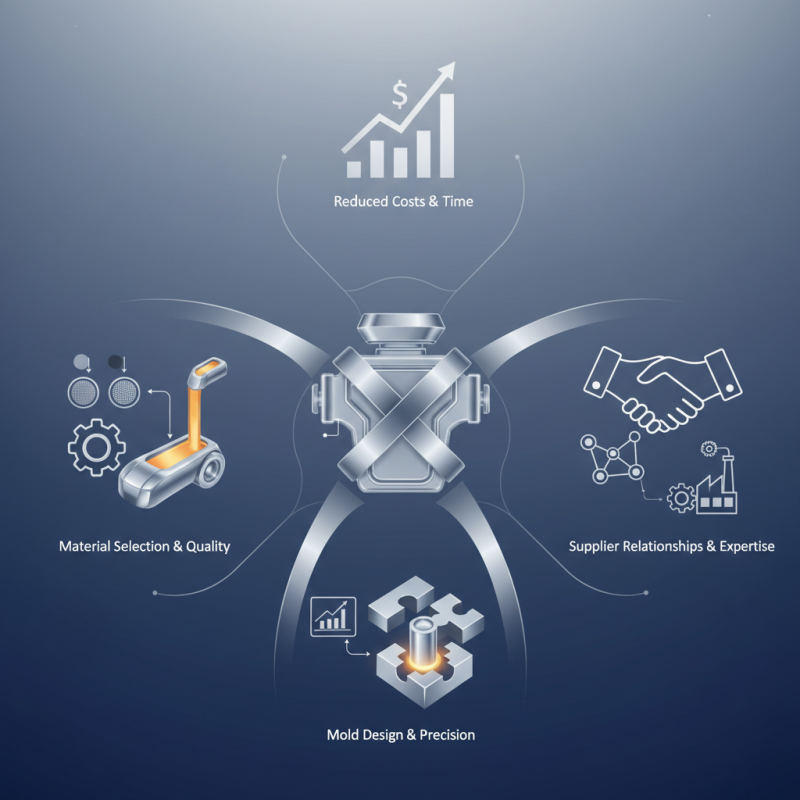
Auto Parts Investment Casting is a specialized process in the manufacturing industry. It allows for the production of complex shapes with high precision. This method can significantly reduce production costs and time. However, to succeed in investment casting, it is essential to understand the nuances of the process.
Many companies overlook key factors such as material selection and mold design. These elements directly impact the final product's quality. Failing to pay attention can lead to costly reworks and delays. Striking a balance between cost and quality is sometimes challenging. However, investing time in research can yield substantial benefits.
Building relationships with experienced suppliers is vital. Knowledgeable partners can provide insight into best practices and potential pitfalls. Their expertise can steer you away from common mistakes. In the world of Auto Parts Investment Casting, leveraging these resources can set your business apart from competitors.
Understanding the Basics of Auto Parts Investment Casting
Investment casting for auto parts is not just a manufacturing process; it's a strategy that requires a deep understanding of the technology and its applications. According to recent industry reports, the global investment casting market is projected to grow by 5.2% annually, reaching approximately $20 billion by 2026. This significant growth highlights the increasing reliance on precision casting in the automotive sector.
Understanding the basics is crucial. Investment casting involves creating a wax pattern and coating it with a ceramics shell for durability. Once the wax is melted away, molten metal is poured into the mold, forming the desired part. This method offers excellent surface finish and dimensional accuracy, often needing little to no machining afterward. However, the initial setup can be costly and intricate, which requires careful planning and material selection.
Challenges exist in scalability and material limitations. Not every auto part can be efficiently produced through investment casting. For complex geometries, alternative methods might be more feasible. Additionally, fluctuations in raw material prices can impact overall production costs. Insight into these factors enables better investment decisions and can enhance overall strategy. Understanding the balance between innovation and traditional methods can lead to more successful outcomes in this competitive market.
Essential Materials for Effective Investment Casting Processes
In investment casting, the choice of materials is crucial for creating high-quality auto parts. Essential materials include wax patterns and refractory ceramics. The wax should melt away cleanly, leaving no residue. This ensures a smooth cavity for the molten metal.
Many professionals overlook the importance of temperature control during the process. Maintaining the right temperature prevents defects in the final product. It’s advisable to run tests to identify the optimal ranges for each material.
Consider the design of your castings. Complex designs may require specialized materials. Also, don’t hesitate to seek expert advice. Collaboration can highlight potential flaws in your strategy. Achieving success in investment casting takes continuous learning and adaptation.
Top Tips for Successful Auto Parts Investment Casting Strategies - Essential Materials for Effective Investment Casting Processes
| Material Type | Melting Point (°C) | Applications | Advantages |
| Aluminum Alloys | 660-720 | Engine components, wheels | Lightweight, good corrosion resistance |
| Steel Alloys | 1370-1450 | Transmission parts, chassis | High strength, durability |
| Brass | 900-940 | Fittings, connectors | Good machinability, aesthetic appeal |
| Nickel Alloys | 1400-1450 | High-temperature applications | Excellent oxidation resistance |
| Titanium Alloys | 1660-1720 | Aerospace and automotive parts | High strength-to-weight ratio, corrosion resistance |
Key Techniques for Enhancing Precision in Casting Auto Parts
Precision in auto parts investment casting is crucial for quality and performance. Achieving this precision requires mastering specific techniques. One effective method is the use of advanced computer-aided design (CAD) software. This software enables engineers to create detailed models, ensuring every component meets stringent specifications.
Another key technique involves selecting the right material grade. Different alloys and composites behave differently during the casting process. Ensure the selected material can withstand operational stresses and environmental conditions. Test different materials to gain insights into strength and flexibility.
Monitoring the casting environment is vital. Temperature, humidity, and other factors can influence the final product. Regular checks can prevent defects that might arise from variations in conditions. Sometimes, even minor adjustments make a big difference in outcomes. Always document the processes for consistency and improvement. This approach encourages ongoing learning and adaptation, essential for long-term success in this field.
Evaluating Cost-Effectiveness in Auto Parts Investment Casting
Investment casting in the auto parts industry is highly nuanced. Evaluating cost-effectiveness can be quite complex. Companies often struggle to balance quality and cost without compromising either. Understanding the total cost of casting is crucial. This includes mold design, materials, labor, and post-processing.
Investors should consider both long-term and short-term costs. Initial setup expenses might be high, but the efficiency of investment casting can lower production costs over time. For some, this can seem daunting. However, proper assessment can reveal hidden savings. Analyzing the lifespan of components can lead to better decision-making. Not all materials yield the same benefits, and sometimes cheaper options lead to greater long-term expenses.
Furthermore, ongoing market fluctuations can affect prices. Staying informed about trends is vital. Ignoring these factors can result in costly miscalculations. Engaging with experienced professionals can provide insights into best practices. Networking within industry circles often uncovers valuable information. Emphasizing collaboration can lead to cost-effective strategies in auto parts investment casting.
Cost-Effectiveness Evaluation in Auto Parts Investment Casting
Best Practices for Quality Control and Inspection in Casting Production
Quality control in auto parts investment casting is critical. Ensuring that cast components meet stringent specifications boosts performance and safety standards. A recent study highlights that up to 30% of casting defects stem from process variability. This statistic underscores the importance of meticulous inspection throughout production.
One effective strategy is implementing real-time monitoring systems. These systems can detect anomalies during the casting process, allowing for immediate adjustments. Such proactive measures can reduce defect rates by approximately 20%, based on recent industry analyses. Additionally, employing advanced inspection techniques, such as X-ray and ultrasonic testing, helps identify internal flaws that may not be visible externally. Without proper inspection, manufacturers risk delivering parts that could lead to failures in the field.
Addressing common issues like surface imperfections and dimensional inaccuracies is essential. Regular training for staff on quality standards plays a vital role. Knowledgeable personnel can identify trends in defects and implement corrective measures. Investing in high-quality materials and equipment is another key factor. However, companies must strike a balance between cost and quality. Continuous assessment and adaptation in these areas can ultimately lead to a more reliable production process.