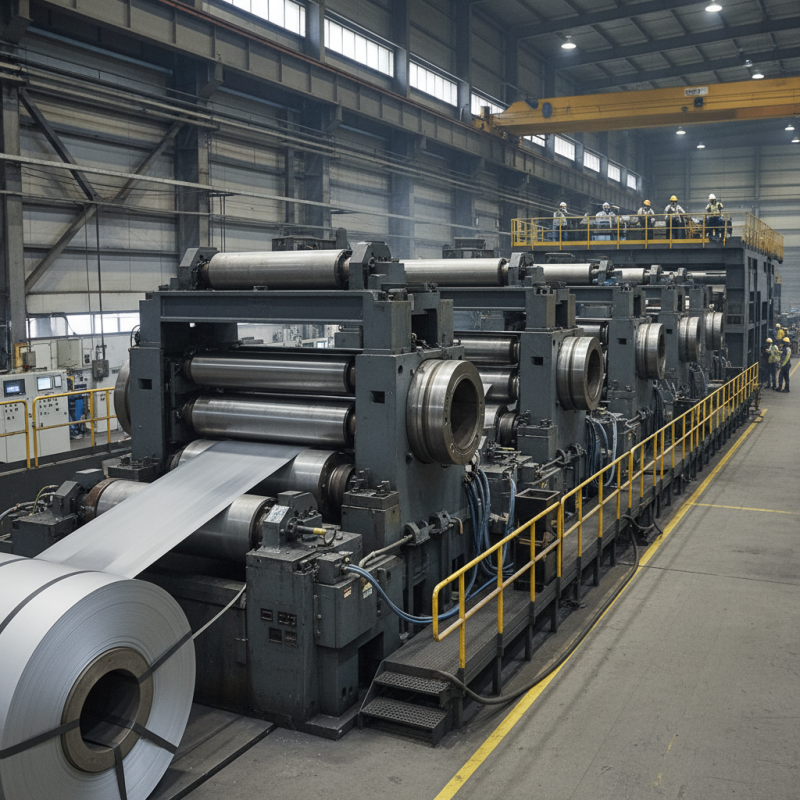
What is a Tandem Cold Rolling Mill and How Does It Work?
A tandem cold rolling mill is a crucial piece of equipment in steel and metal processing. It consists of multiple rolls working in sequence. This setup allows for efficient shaping and thickness reduction of materials. Each pass through the mill refines the metal further, enhancing its properties.
Understanding how a tandem cold rolling mill operates reveals its complexity. The process begins with large metal coils fed into the mill. Each roll exerts pressure, gradually decreasing the thickness. This method conserves energy and maximizes output. Though effective, it requires precision to avoid defects.
The tandem cold rolling mill must be carefully monitored. Adjustments are necessary to maintain consistent quality. Operators face challenges such as maintaining temperature and speed. Reflecting on these aspects, the operation is intricate. It demands both skill and attention to detail.
What is a Tandem Cold Rolling Mill?
A tandem cold rolling mill is a series of rolling mills arranged in sequence. This setup reduces the thickness of metal strips efficiently. It is widely used for steel and aluminum processing, among other metals. The process involves passing the metal through several rolls without heating it. This method maintains the metal's properties while achieving a smooth surface.
In a tandem setup, each mill reduces the thickness just a bit. The metal enters the first mill and gradually becomes thinner as it passes through each subsequent mill. Each roll is essential for achieving the desired thickness and surface quality. The complexity increases with each mill, as precise adjustments are needed to avoid defects. Occasionally, issues like uneven thickness or surface imperfections occur. These can lead to costly corrections.
Temperature control and lubrication are critical to ensure smooth operation. The environment inside a tandem mill is often challenging. With each run, operators must pay close attention. Despite advanced technology, mistakes can happen. It takes experience to recognize when something isn’t quite right. Regular maintenance is needed to reduce downtime. Balancing consistency and quality is no easy task in this intricate process.
Key Components of a Tandem Cold Rolling Mill
A tandem cold rolling mill is a sophisticated machine designed for processing metal strips. Its effectiveness lies in several key components that work together seamlessly. The primary element is the rolling stand, which consists of rollers that apply pressure to the metal. Each stand allows for a specific reduction in thickness, increasing the efficiency of the process.
Another critical component is the automation system. This system monitors and controls the speed and pressure of the rollers. If mismanaged, it can lead to imperfections in the final product. Sensors collect data to ensure quality, but they also require regular maintenance. Operators must be vigilant.
The lubrication system is equally important. It reduces friction between the rollers and the metal strip, preventing damage. However, the choice of lubricant matters. Incorrect lubricants can lead to buildup or contamination. The cooling system works in tandem with lubrication, maintaining optimum temperatures. Balancing these components can be challenging and demands constant attention.
Tandem Cold Rolling Mill Production Process
This chart illustrates the production output and efficiency of key components in a Tandem Cold Rolling Mill process. The data reflects the typical output measured in tons over a working shift.
The Cold Rolling Process: Step-by-Step Overview
The cold rolling process is an intricate method used to produce thinner gauge metal sheets and strips. It begins with the passage of metal through a pair of rollers. The metal is preheated, ensuring it is malleable and can be formed easily. The risk of defects increases at this stage if temperatures are not managed correctly. A report by the International Journal of Advanced Manufacturing Technology indicates that over 30% of manufacturers face quality control issues during this phase.
Once the metal is inline and ready, the rollers apply significant pressure. This action compresses the material, reducing its thickness. Precision is crucial. If the rolling pressure is too high or low, the resulting product may not meet specification standards. The average reduction in thickness can range from 40% to 95%, depending on material type. According to a study by the Metal Forming Institute, achieving uniform thickness is challenging, with a variance of up to 2% seen in some operations.
After rolling, the metal may undergo additional processes like annealing or surface treatment. Each step introduces potential for error or imperfection. Failures in these processes can affect not only the appearance but also the mechanical properties of the final product. Observing these factors is vital for quality assurance. Industry experts suggest that constant monitoring and adjustment can help mitigate these risks significantly.
Industry Applications of Tandem Cold Rolling Mills
Tandem cold rolling mills play a vital role in various industries. These mills are essential for producing thin metal sheets and strips. They offer improved surface quality and dimensional precision. According to a recent market report, the global cold rolling mill market is expected to reach USD 8 billion by 2025, driven by demand from automotive and construction sectors.
In the automotive industry, tandem cold rolling mills are used to create lightweight components. Manufacturers aim to reduce vehicle weight for better fuel efficiency. A study shows that reducing vehicle weight by 10% can lead to a 5-7% drop in fuel consumption. This effectiveness highlights the importance of cold rolling technology in sustainable development.
Moreover, in the construction sector, these mills supply high-strength steel for structural applications. The demand for lightweight and durable materials continues to rise. However, challenges remain. The need for constant innovation is critical. New techniques must be embraced to increase production efficiency. This is essential given the competitive nature of the market. Evaluating energy consumption and material waste is crucial as well. Enhanced processes can significantly impact profitability and sustainability.
Tandem Cold Rolling Mills Data Overview
| Dimension | Specification/Value |
| Rolling Width | 1000 mm - 2000 mm |
| Max Reduction Rate | 50% per pass |
| Operation Speed | 200 - 500 m/min |
| Thickness Range | 0.1 mm - 6 mm |
| Material Types | Steel, Aluminum, Copper |
| Investment Cost | $2 million - $50 million |
| Maintenance Frequency | Monthly inspections |
| Environmental Impact | Low - Moderate emissions |
Benefits and Advantages of Using Tandem Cold Rolling Technology
Tandem cold rolling technology has transformed the metal manufacturing industry. Its benefits are numerous and compelling. One of the main advantages is improved efficiency. With multiple rolling mills working together, manufacturers can produce thinner sheets of metal in a single pass. This process saves time and reduces production costs.
Another key benefit is enhanced product quality. The tandem process produces uniform thickness and surface finish. It minimizes defects, resulting in higher-quality sheets. When using this technology, manufacturers can meet strict standards for various applications. The precise control over thickness is a significant advantage.
Tip: Regular maintenance of the rolling mill can prolong its lifespan. Check alignment often to prevent uneven wear of rollers.
Moreover, the tandem cold rolling process is more environmentally friendly than traditional methods. It consumes less energy per unit of output. This efficiency contributes to lower operating costs and smaller carbon footprints. As industries move towards sustainability, this technology is becoming increasingly valuable.
Tip: Consider training employees on the latest techniques. A skilled workforce can optimize equipment usage and improve production rates.
Incorporating tandem cold rolling can lead to growth and competitiveness. However, it’s essential to assess the initial investment carefully. The transition may require adjustments and patience. Adopting new technology is not always seamless, but the potential rewards are significant.