Top Booty Lifting Body Shaper Manufacturer in China?
Choosing a top Booty Lifting Body Shaper manufacturer in China takes more than comparing prices or polished product photos. A dependable partner should understand fabric stretch, seam placement, sizing, and how shaping panels perform during ordinary movement. Small details matter. A waistband that rolls after an hour can undermine an otherwise attractive design.
This guide introduces practical ways to assess manufacturers, from reviewing product samples to asking clear questions about materials, customization, and quality checks. Look for consistent stitching, smooth inner seams, and fabric that recovers its shape after gentle stretching. Request size charts and sample pieces before committing to a larger order. Ask how the supplier handles fit feedback, since early samples may need revision.
Experience helps, but it does not guarantee a perfect result. No supplier is perfect. Product claims should be supported by clear specifications rather than vague promises. Buyers should also check communication, production timelines, and available inspection records. These steps cannot remove every risk, and fit will vary across bodies. That deserves honest attention. With careful evaluation, brands can identify a manufacturer whose capabilities match their design goals and customers’ comfort expectations.
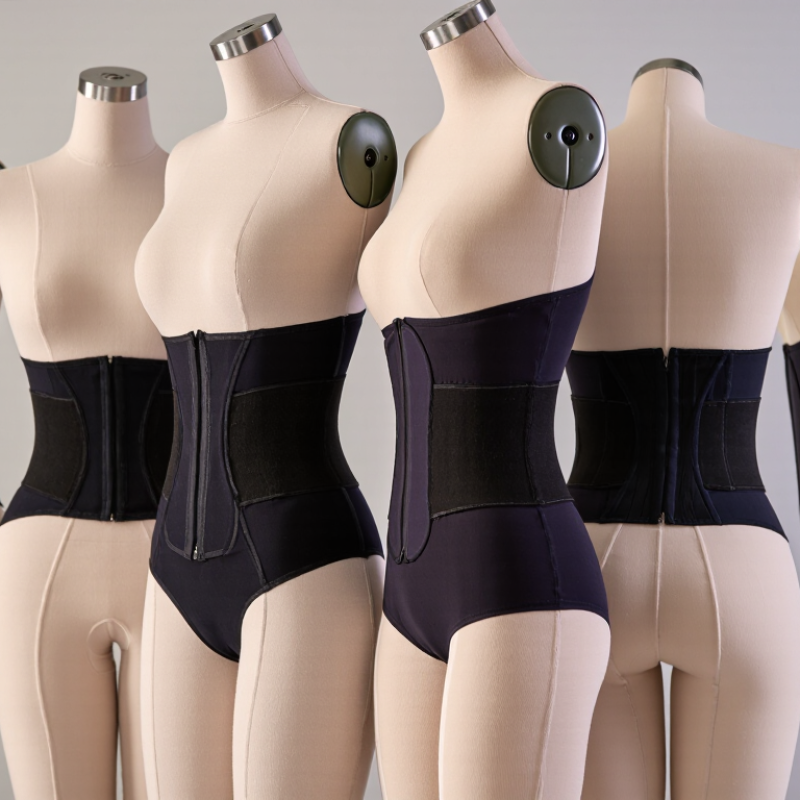
Booty-Lifting Body Shapers: Purpose and Core Design
Booty-lifting body shapers are designed to create a smoother silhouette and visually support the buttocks, not to change body structure. Their effect comes from patterning and controlled compression. Shaped rear panels can add definition, while firmer fabric beneath the seat helps guide the garment’s fit. A wide waistband can reduce rolling, but excessive tightness may dig into the waist. Fit matters.
The market reflects sustained interest in shaping apparel: Grand View Research estimated the global shapewear market at USD 2.9 billion in 2023 and projected an 8.5% compound annual growth rate from 2024 to 2030. That figure describes market growth, not proof that every design performs well.
In product development, assess fabric recovery, seam placement, stretch direction, and comfort while sitting, walking, and bending. A cotton-lined gusset and breathable, resilient fabric can improve everyday wear. Still, no panel can suit every body. A design may look convincing on a mannequin yet pinch after an hour of sitting. That trade-off deserves another fit test.
How Shaping Panels and Support Features Affect Fit
Shaping panels influence where a body shaper holds, smooths, and lifts. For a booty-lifting style, curved rear panels can guide fabric around the hips instead of flattening them. Their placement matters: a seam that sits too high may dig in, while one that sits too low can reduce lift. Panel stretch should also match the garment’s compression. Stronger fabric is not automatically better.
Support features affect comfort during real movement. A stable waistband can help limit rolling, and adjustable straps can reduce pressure on the shoulders. However, tight elastic or rigid seams may leave marks after sitting. A sample can look convincing on a table and still feel restrictive when someone bends or walks. That gap deserves attention. Manufacturers should assess panel alignment, seam strength, and fabric recovery across sizes, not just on one fit model.
Tips: Check your measurements against the size chart, then sit, walk, and bend in the garment. It should feel supportive, not painful. Don’t size down automatically; fit varies by body shape and panel design.
How to Evaluate Body-Shaper Manufacturers in China
Top Booty Lifting Body Shaper Manufacturer in China?
How to Evaluate Body-Shaper Manufacturers in China
A promising supplier should explain how its garment creates lift, not rely on flattering product photos. Ask for fabric composition, compression zones, and size-grade measurements. Then request a sample in your target size range. Check whether the waistband rolls, seams dig in, or the leg openings leave marks after several hours of wear. Small details matter.
Test consistency. Compare samples from different production runs, and measure waist, hip, and inseam points against the specification sheet. Wash a sample according to its care instructions, then inspect its shape and stretch recovery. Ask how operators check stitching and handle defective pieces. Useful answers include actual inspection steps, not broad claims. Keep notes.
Production capacity is only part of the decision. Clarify minimum order quantities, sample fees, lead times, and how changes are approved before bulk production. Request relevant factory documentation and verify that it matches the facility and product scope. A polished sample can still hide uneven sizing. Be cautious about promises of perfect results; garment fit varies across bodies, and no single design suits everyone. A clear revision process is more useful than confidence alone.
Choosing a Manufacturer for Customization and Scale
A custom body-shaper supplier should prove both fit control and production capacity. Grand View Research valued the global shapewear market at USD 2.26 billion in 2023 and projected an 8.4% annual growth rate through 2030. Growing demand makes repeatable sizing more important than impressive sample-room claims. Ask for a size-graded sample set, not one carefully adjusted prototype. Check seam strength, compression consistency, and stretch recovery after repeated washing. Small details matter. A waistband that rolls during a fitting can become a costly production problem.
Scale also depends on material planning. Textile Exchange’s 2024 Materials Market Report estimated global fiber production at 124 million tonnes in 2023, highlighting the complexity of tracing inputs across supply chains. Request fabric specifications, test records, and a clear plan for replenishment before approving a bulk order. Then compare the factory’s stated monthly capacity with its machinery, staffing, and current commitments. Start with a pilot run. It may expose issues that polished samples hide. Discuss minimum order quantities, lead times, and change-control procedures in writing; a supplier that welcomes small corrections is often more useful than one promising everything. No process is flawless, and I would treat vague answers about capacity as a reason to verify—not an automatic rejection.
Top Booty Lifting Body Shaper Manufacturer in China? Choosing a Manufacturer for Customization and Scale
This chart shows a suggested 100-point buyer evaluation framework for custom body shaper manufacturing. The weights are planning recommendations, not market statistics; adjust them to match your product and verify supplier capabilities with samples and production records.