
2026 Top Coal Mine Fan Types for Global Buyers?

Global coal demand remains a major equipment driver. The International Energy Agency’s Coal 2024 report recorded approximately 8.7 billion tonnes of coal demand in 2024. It also expects demand to remain broadly stable through 2027. This outlook keeps mine ventilation investment relevant for buyers, operators, and engineering contractors.

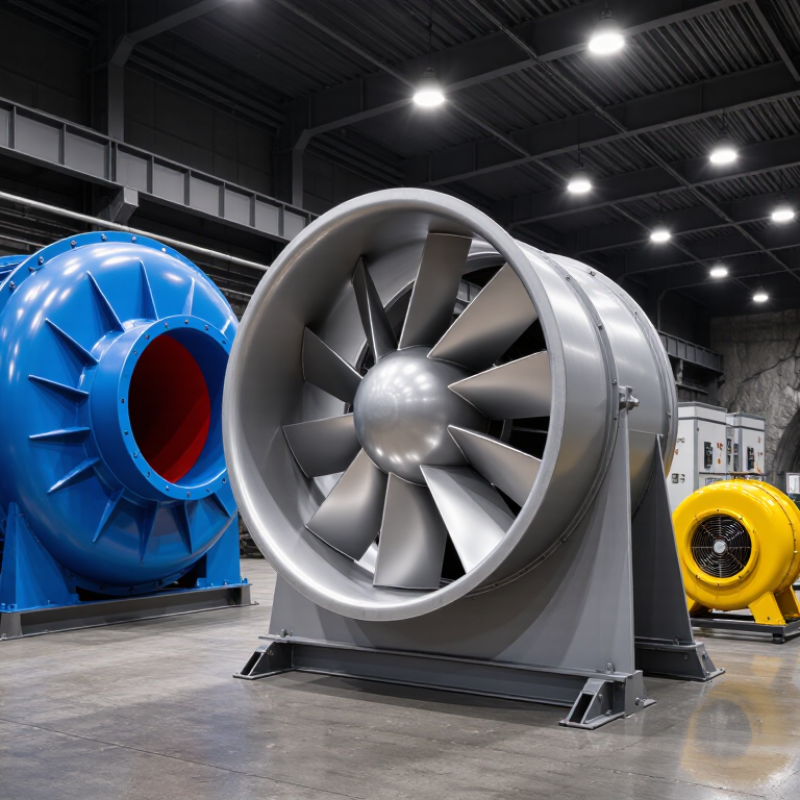
This guide examines the leading Coal Mine Fans used in underground and surface mining. It compares axial-flow fans, centrifugal fans, main mine fans, auxiliary fans, and variable-speed systems. Each type behaves differently underground. An axial fan may move large air volumes through a compact installation. A centrifugal fan can provide stronger pressure for complex resistance conditions. Auxiliary fans support headings, tunnels, and development faces where fresh air must reach a working zone.

Selection cannot depend on airflow alone. NIOSH research emphasizes ventilation planning, methane control, dust management, and system reliability. In the United States, MSHA ventilation requirements under 30 CFR Parts 57 and 75 provide useful regulatory reference points. International buyers should also review local mine-safety rules, hazardous-area classifications, noise limits, and electrical standards.

Real purchasing decisions involve more than catalogue ratings. A fan running beside a dusty portal needs robust bearings, accessible cleaning points, and dependable controls. Energy use, spare-part availability, installation space, and emergency operation also matter. No ranking is universal. A high-pressure centrifugal fan may be excessive for a short airway, while a low-cost axial unit may struggle in a long, resistant tunnel. That is an uncomfortable limitation. Manufacturer curves can also differ from field performance. Buyers should verify test conditions, duty points, efficiency data, and after-sales support before choosing a 2026 solution.
2026 Top Coal Mine Fan Types for Global Buyers?

Define Fan Duty with Airflow, Pressure, and Fan Laws (Q∝N; P∝N²; W∝N³)

For global coal mine buyers, fan selection starts with duty, not catalog size. Define required airflow Q in cubic meters per second and total pressure P in pascals. Include airway resistance, leakage, elevation, temperature, and air density. Axial fans often suit high-volume main systems, while centrifugal fans can support higher-pressure duties. A stated point, such as 180 m³/s at 2,400 Pa, is more useful than “high capacity.” Small omissions create expensive commissioning problems.

Fan laws help predict speed changes when diameter and gas conditions remain comparable. Airflow follows Q ∝ N, pressure follows P ∝ N², and shaft power follows W ∝ N³. If speed rises 10%, airflow rises about 10%, pressure about 21%, and power about 33%. That last figure deserves attention. Motor margin, variable-speed control, and cooling must match the real duty. Never use these laws alone; the mine system curve decides the operating point.

Specify fan curves, efficiency, vibration limits, emergency operation, and test methods in the purchase file. Ask for witnessed performance data and verify airflow with calibrated instruments after installation. In field reviews, measured resistance often differs from early calculations because doors, stoppings, and bends change. Reality changes. A neat spreadsheet can still be wrong. Recheck air density and pressure definitions before approving the final fan.

Compare Axial and Centrifugal Fans at 70–85% Total-Efficiency Targets

For 2026, global coal-mine buyers should compare fans at the actual duty point, not only catalog ratings. A 70–85% total-efficiency target can reduce power waste during long operating hours. Axial fans usually suit high airflow and moderate pressure duties. They are compact and often simpler to install in straight ventilation routes. Centrifugal fans can provide stronger pressure performance when resistance rises through bends, dampers, or long shafts. They also offer stable operation across demanding systems. Real data matters. Fan choice depends on airflow, pressure, air density, noise, maintenance access, and emergency operating requirements.

Tips: Request certified performance curves, motor efficiency data, and test conditions. Check whether the quoted efficiency includes the motor, drive, and transmission. Compare both fan types at the same airflow and total pressure. A low purchase price may hide higher lifetime energy costs. Ask for site references with similar mine depth and ventilation resistance.

During commissioning, measure airflow, pressure, vibration, and electrical input at several speed settings. An independent field test can reveal losses caused by poor transitions or leakage. However, field conditions rarely match laboratory results perfectly. That limitation deserves attention. Buyers should also confirm local safety certifications, temperature ratings, inspection procedures, and spare-part availability before ordering. In some projects, an axial fan reaches the target efficiently, but a centrifugal design may remain more dependable after the mine layout changes. The best decision is measurable, documented, and open to revision.

2026 Top Coal Mine Fan Types for Global Buyers

Axial and centrifugal fans can both meet the 70–85% total-efficiency target range used for modern coal-mine ventilation planning. Axial fans generally suit high-volume airflow with moderate pressure, while centrifugal fans are often selected for higher-pressure duties and more stable performance across system resistance changes.

Note: The values represent realistic engineering planning benchmarks for total efficiency at typical mine-ventilation pressure points. Final performance depends on fan diameter, blade or impeller design, operating speed, system resistance, leakage, and control method.

Select Main, Booster, and Auxiliary Fans by Ventilation Duty and Scale

2026 Top Coal Mine Fan Types for Global Buyers?

Select Main, Booster, and Auxiliary Fans by Ventilation Duty and Scale

Fan selection should begin with airflow duty, pressure loss, and mine layout. Main fans ventilate the entire network from surface stations. They need high efficiency, stable control, and reliable emergency operation. Booster fans support long underground districts where pressure losses become difficult to overcome. Auxiliary fans serve advancing headings, using ducts to deliver air close to the working face.

The IEA Coal 2024 report recorded global coal demand at about 8.5 billion tonnes in 2023. Large production volumes still create demanding ventilation conditions, especially in deep, gassy, or mechanized mines. Global Energy Monitor’s Global Coal Mine Tracker also shows continued development activity across several coal-producing regions.

Scale matters, but it is not the only answer. A smaller mine may require high pressure because of restricted roadways, leakage, or long duct runs. One practical weakness is relying on catalog airflow alone. It can hide system resistance, seasonal density changes, and actual underground losses.

Tips: Ask for the complete fan curve, not only the rated airflow. Verify duty points against measured resistance. For main fans, review redundancy, variable-speed control, noise, and inspection access. For booster fans, check interaction with regulators and nearby ventilation circuits. For auxiliary fans, examine duct leakage, face distance, and explosive-atmosphere compliance. Test performance using recognized procedures, such as ISO 5801 or AMCA-based methods. Keep a written commissioning record. Small measurement errors can become expensive ventilation decisions.

Verify Main-Fan Safeguards Under MSHA 30 CFR 75.310 Requirements

In 2026, global buyers should treat main-fan compliance as a safety decision, not a catalog comparison. The IEA Coal 2024 report recorded global coal demand at about 8.5 billion tonnes in 2023, an historic high. That scale increases pressure on ventilation systems. It does not reduce inspection duties.

Under MSHA 30 CFR 75.310, verify the main fan’s surface installation, fire-resistant construction, operating continuity, and protection against unintended air reversal. Confirm that doors, controls, alarms, and power arrangements work during realistic failure tests. Review pressure records, maintenance logs, and emergency procedures. A fan may meet its airflow rating yet fail operationally when power is interrupted. That uncomfortable possibility deserves attention.

The Global Energy Monitor Global Coal Mine Tracker 2024 shows coal projects remain distributed across many mining regions, so local approvals and site conditions vary. US operations still require precise MSHA alignment. Ask suppliers for tested fan curves, motor data, enclosure documentation, and evidence of safeguard inspections. NIOSH research repeatedly links ventilation performance with methane and dust-control reliability, but paperwork alone cannot prove field readiness. Walk the intake and return entries. Listen for abnormal vibration. Check reversal devices under controlled conditions. Some procurement teams still compare efficiency before emergency behavior. That order may need reconsideration.

2026 Top Coal Mine Fan Types for Global Buyers? - Verify Main-Fan Safeguards Under MSHA 30 CFR 75.310 Requirements

Comparative engineering reference for coal-mine ventilation planning. Performance figures are typical selection ranges, not regulatory limits; final fan duty, controls, and approvals must be confirmed by a qualified ventilation engineer and the applicable mining authority.

Fan type / configuration Typical mine application Typical airflow range* Typical pressure range* Principal advantages Selection cautions Main-fan safeguard verification
Axial-flow main fan Large underground coal mines requiring high air volume at moderate system resistance. 50–500 m³/s
(106,000–1,060,000 cfm)
1.0–6.0 kPa
(4–24 in. water gauge)
High volume, compact installation, adjustable blade options, and practical reversible designs. Can be sensitive to stall, unstable operating points, inlet distortion, and system changes. Verify continuous operation arrangements, fan-stop notification, emergency power, interlocks, vibration monitoring, and approved airflow-control procedures.
Centrifugal main fan Deep or extensive workings with comparatively high resistance and stable high-pressure duty. 20–300 m³/s
(42,000–636,000 cfm)
2.0–10.0 kPa
(8–40 in. water gauge)
Good pressure capability, comparatively stable performance, and suitability for high-resistance networks. Usually larger and heavier; reversing airflow may require dedicated arrangements and may reduce performance. Verify fan-house access control, rotating-equipment guarding, bearing temperature and vibration alarms, standby capacity, and procedures for a fan stoppage.
Mixed-flow fan Sites needing a compromise between axial-flow volume capability and centrifugal-style pressure performance. 30–250 m³/s
(64,000–530,000 cfm)
1.5–8.0 kPa
(6–32 in. water gauge)
Balanced pressure-to-volume capability and potentially efficient operation over a broad duty range. Performance depends strongly on impeller geometry, system resistance, and correct inlet and outlet design. Verify certified performance curves, operating-point stability, overspeed protection, airflow measurement, and alarm response testing.
Reversible axial fan Mines requiring planned reversal capability for emergency ventilation or specific mine layouts. 40–400 m³/s
(85,000–847,000 cfm)
1.0–5.0 kPa
(4–20 in. water gauge)
Supports controlled airflow reversal without installing a completely separate primary fan system. Reverse-flow capacity may differ from forward-flow capacity; reversal can impose substantial transient loads. Verify the approved reversal plan, electrical and mechanical interlocks, restart logic, door and regulator impacts, communication, and personnel-accountability procedures.
Parallel twin-fan installation Large or critical mines where operational flexibility, maintenance continuity, and partial-load capability are priorities. System-dependent; commonly 80–800 m³/s total
(169,000–1,695,000 cfm)
1.0–8.0 kPa
(4–32 in. water gauge)
Allows staged operation, maintenance planning, and redundancy when the mine ventilation design supports it. Fans may interact aerodynamically; unequal loading, reverse flow through an idle fan, and common-power failures require analysis. Verify independent status indication, automatic isolation where required, common-mode failure protection, fan-stop notification, and the approved contingency ventilation plan.
MSHA 30 CFR 75.310 buyer-verification checklist
  • Confirm that the selected main fan and any fan serving an equivalent function are maintained and operated continuously as required by the applicable ventilation plan.
  • Confirm approved procedures for controlling the ventilating air current when a main fan is stopped.
  • Confirm notification, communications, withdrawal, and re-entry procedures for affected areas when fan operation is interrupted.
  • Review emergency power, automatic controls, manual override, restart permissives, and fail-safe operating logic.
  • Verify fan performance testing, airflow and pressure measurement, alarm records, vibration monitoring, bearing-temperature monitoring, and preventive-maintenance documentation.
  • Have the completed design reviewed against the mine-specific ventilation plan and current MSHA requirements before procurement or commissioning.

* Typical indicative ranges are provided for preliminary comparison only. Actual capacity and pressure depend on mine depth, airway resistance, leakage, gas-control requirements, fan altitude, temperature, density, duty-point margin, and the final ventilation network model.

Rank 2026 Purchases by ISO 5801 Tests, Noise, Energy, and Lifecycle Cost

For 2026 coal-mine fan purchases, rank equipment by verified duty-point performance, not catalog airflow. High-volume axial fans usually rank first for main ventilation, especially where pressure demand is moderate. Centrifugal fans rank higher in deep workings, where pressure, dust loading, and stable operation matter more. Mixed-flow fans suit compact installations, but their efficiency claims need closer checking.

Request an ISO 5801 test report showing airflow, pressure, shaft power, and efficiency at the actual operating point. Peak efficiency is not enough. Specify acoustic power under ISO 3744 or ISO 13349 conditions, because a quiet-looking workshop test may differ underground. The U.S. Department of Energy fan-system sourcebook warns that throttling and oversized equipment create avoidable losses. Variable-speed control can reduce this waste, but only when ventilation demand genuinely changes.

Energy deserves a hard ranking. The IEA’s Energy Efficiency 2024 analysis places electric motor systems near 53% of global electricity use, making fan motors a serious lifecycle cost. A continuous 500-kilowatt fan uses 4.38 million kWh yearly. At 0.08 dollars per kWh, that is about 350,000 dollars before maintenance. Include motor, drives, bearings, inspections, downtime, and replacement parts. I would not trust a low purchase price without these figures. The imperfect part is airflow forecasting; production plans change, and a beautifully optimized fan can become wasteful after one ventilation redesign.

Article Source:

Go to Top
Translate »