
What Are the Top Types of Automatic Glass Cutting Machines?

Choosing the right machine can shape every stage of a glass-processing operation. Automatic Glass Cutting Machines help fabricators improve cutting consistency, reduce manual handling, and manage demanding production schedules. Their value becomes clear beside a cutting table, where accurate measurements and clean movements affect every finished panel.

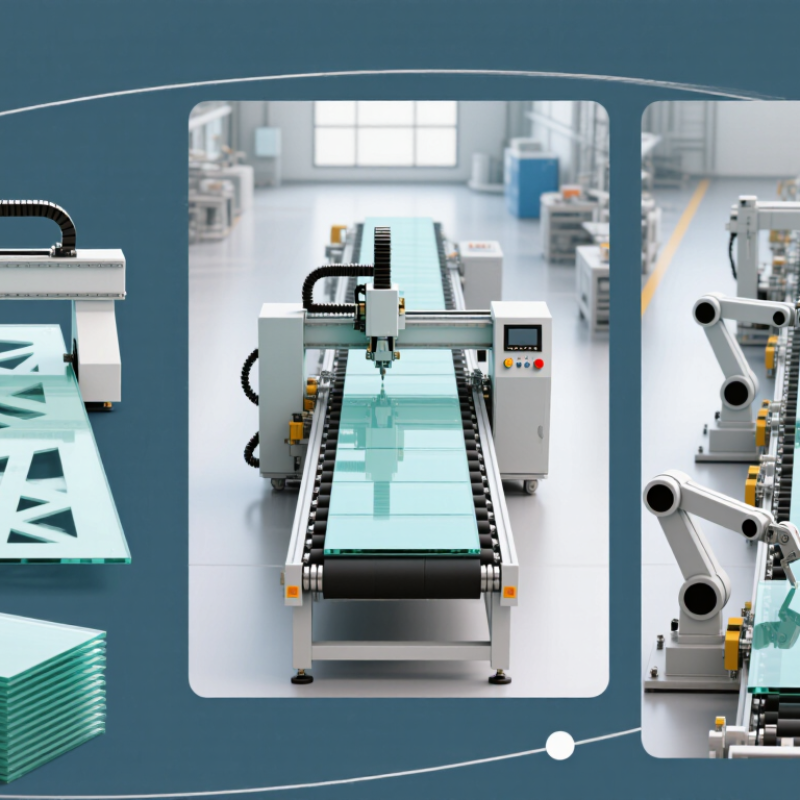
The market includes several important machine types. CNC automatic glass cutters suit detailed shapes and repeatable designs. Straight-line cutting machines support fast production of standard sheets. Automatic loading and unloading systems reduce lifting, positioning errors, and workplace strain. Some advanced models combine cutting, breaking, drilling, or software control within one production line.

Each type serves a different purpose. A small workshop may prefer a compact table with simple controls. A large processor may require robotic handling, barcode tracking, and continuous operation. Glass thickness, sheet size, cutting speed, software compatibility, and maintenance access also deserve careful review. These details often matter more than a machine’s advertised speed.

Experience reveals a practical truth: the most expensive option is not always the best fit. A powerful system can become inefficient when operators lack training or suitable floor space. Even reliable equipment needs calibration, cleaning, and thoughtful supervision. This guide examines the top types, their working principles, key advantages, and limitations. It also considers how production volume, product design, and long-term service support influence a responsible buying decision. Mistakes happen. Careful comparison helps limit them.
What Are the Top Types of Automatic Glass Cutting Machines?

Definition and Core Functions of Automatic Glass Cutting Machines

Automatic glass cutting machines are computer-controlled systems that measure, score, and separate flat glass with limited manual handling. Their core function begins with a digital cutting plan. Software arranges shapes on a sheet, reducing unused material.

According to Grand View Research’s 2024 glass market analysis, the global glass market is expected to expand at roughly 4% annually through the decade. That growth increases pressure to control waste, labor time, and cutting accuracy.

Most systems use a bridge-style cutting head mounted above a flat table. The head moves along programmed X and Y coordinates. A carbide or diamond wheel creates a controlled score line. Pneumatic or mechanical breakers then separate the glass.

Advanced tables add automatic loading, edge detection, shape recognition, and sorting. CNC cutting centers support complex forms, while laminated-glass systems often include specialized scoring and breaking sequences. Low-emissivity glass may require careful coating orientation and pressure control.

The results depend on more than software. A 2023 report from the International Energy Agency states that buildings consume about 30% of global final energy demand, increasing interest in efficient glazing production.

Still, a dirty suction cup can shift a sheet. A small error matters. Operators must verify calibration, glass thickness, surface condition, and waste settings. Automation improves repeatability, but it does not remove judgment. Real production trials remain necessary, and some advertised efficiency gains may not appear in every factory.

Key Factors for Classifying Automatic Glass Cutting Machines

What Are the Top Types of Automatic Glass Cutting Machines?

Automatic glass cutting machines are best classified by their working method and production purpose. CNC cutting tables suit flat glass sheets and deliver repeatable shapes through digital programs. Laminated glass cutters use specialized scoring and separation systems for layered materials. Some machines combine cutting, breaking, and sorting, reducing manual handling between stages. However, automation levels vary widely. A machine may cut automatically but still require manual loading or edge removal.

Glass size and thickness are practical classification factors. Large-format tables support architectural panels, while compact machines fit smaller workshops. Cutting accuracy also depends on motion control, blade pressure, table stability, and software calibration. In daily production, a clean score line and smooth breakout matter more than impressive specifications. Operators should examine cycle time, material waste, maintenance access, and compatibility with existing handling equipment. A fast machine can become inefficient when setup changes are frequent.

Tips: Test the machine with your actual glass, including coated or laminated samples. Check cut quality at corners and narrow strips. Ask for measurable tolerance data, not general claims. Review training, spare parts, and emergency controls before purchase. It is easy to overestimate automation. A realistic workflow study may reveal that a simpler machine performs better for your team.

Main Types of Automatic Glass Cutting Machines

Automatic glass cutting machines are commonly divided by cutting method, glass type, and production scale. Straight-line cutting machines handle rectangular sheets with fast, repeatable scoring. They suit windows, doors, tabletops, and standard construction panels. Their cutting bridges usually move along fixed axes, reducing operator effort and measurement errors. Speed is not everything. Correct scoring pressure still determines the final edge quality.

CNC shape-cutting machines are designed for circles, arches, triangles, and other irregular profiles. A computer-controlled table guides the cutting head across the glass surface. These machines are useful for furniture, automotive parts, decorative panels, and customized building projects. Some models combine cutting, automatic glass positioning, and edge-breakout functions. This reduces handling between processes, but it also increases maintenance demands. Dust, worn tools, or inaccurate calibration can affect several operations at once.

Laminated glass cutting machines use specialized systems to score both glass layers and separate the interlayer. They often require controlled heating, precise alignment, and careful waste management. Automatic loading and unloading systems are another important type, especially in high-volume factories. They use suction frames to lift large sheets and reduce manual strain. In practice, manufacturers should compare usable table size, cutting tolerance, software compatibility, and after-sales technical support. The details matter. A larger machine may seem more productive, yet it can waste energy and floor space when orders remain small. Trial cutting with the actual glass thickness is wise, because catalog specifications rarely show every production difficulty.

How Each Machine Type Handles Different Glass Cutting Tasks

What Are the Top Types of Automatic Glass Cutting Machines?

How Each Machine Type Handles Different Glass Cutting Tasks

Automatic glass cutters are not interchangeable. A straight-line table cutter suits repeated rectangular sheets for windows, doors, and interior panels. It scores the surface with controlled pressure, then uses automatic breakout. This reduces manual lifting and improves repeatability. According to the 2024 Global Status Report for Buildings and Construction, buildings consume about 30% of global final energy. That pressure increases demand for accurately processed energy-efficient glazing.

CNC cutting tables handle irregular shapes, curves, and small production batches. Their software controls tool paths, while vacuum zones hold the sheet steady. They fit architectural features, but setup errors can waste expensive glass. Jumbo cutting lines serve high-volume processors. They combine loading, alignment, scoring, and breaking in one sequence. Laminated-glass cutters work differently. They score both glass layers and separate the interlayer with heat or specialized cutting tools. The result depends heavily on film type, temperature, and edge quality.

Coated-glass and low-emissivity sheets need careful orientation. Cutting through the coating is possible, but damaged edges may affect later sealing. The International Federation of Robotics reported 162 industrial robots per 10,000 manufacturing employees globally in 2023. Automation is expanding, yet glass still punishes poor calibration.

A machine can be fast. It cannot correct warped sheets.

My practical concern is often overlooked: buyers compare cutting speed, then underestimate software training, dust control, and maintenance. A slower table with dependable breakout may outperform a faster line during mixed orders.

Choosing the Right Automatic Glass Cutting Machine for Your Needs

Choosing an automatic glass cutting machine starts with the glass, not the machine price. Float-glass processors often need CNC cutting tables with automatic loading, edge detection, and optimized nesting. Laminated-glass lines require stronger scoring control and film-handling support. A compact table may suit custom interiors, while a high-speed bridge cutter fits repeated architectural panels. Tempered glass must be cut before heat treatment. This detail is easy to overlook.

Capacity should match your real workflow. Measure sheet sizes, daily volume, thickness ranges, and required tolerances. According to the International Energy Agency’s Buildings 2023 report, buildings represent about 30% of global final energy demand. Energy-efficient motors and standby controls therefore deserve attention, even when cutting accuracy remains the priority. The U.S. Department of Energy also reports that compressed-air leaks can waste 20–30% of compressor output. Check pneumatic consumption carefully. A machine that cuts quickly may still raise operating costs.

Ask for measured data, not attractive claims. Request cutting accuracy results, glass-breakage rates, software demonstrations, and service-response records. ASTM C1036 covers basic flat-glass quality, but your downstream process may demand tighter controls. In practice, automation reduces repetitive handling, yet it does not remove inspection. Dust, uneven racks, or poorly calibrated sensors can spoil an expensive sheet. I would leave room for manual verification. That is less impressive, but often more reliable.

Go to Top
Translate »