Top 10 Yarn Spinning Machines You Should Know About?
The yarn spinning machine industry has seen remarkable growth. According to a report by Textile Machinery, the global market for these machines is projected to reach $5 billion by 2026. This growth is driven by the increasing demand for high-quality yarn in textile production. Innovations in technology are also playing a significant role. Newer machines enhance efficiency and reduce waste.
However, not all machines are created equal. Choosing the right yarn spinning machine can be challenging. Some machines are designed for specific types of fibers, which can limit their versatility. Others may require a steep learning curve for operators. This complex landscape makes it vital to understand the top options available.
Investing in the right machine is critical. A well-selected yarn spinning machine can boost productivity. It can also minimize downtime and operational costs. However, buyers sometimes overlook important specifications, leading to regrets later. The decision warrants careful reflection and insight into current market trends.
Overview of Yarn Spinning Machines and Their Importance
Yarn spinning machines play a crucial role in the textile industry. They are responsible for transforming raw fibers into yarn, enabling the creation of various fabrics. According to industry reports, the global yarn market is expected to grow by 4.5% annually, driven by rising demand for textiles in emerging economies. These machines enhance efficiency and precision, increasing production rates significantly.
Choosing the right spinning machine can be challenging. It's essential to consider factors like fiber type, desired yarn count, and production scale. A well-informed choice can lead to cost savings and improved product quality. Did you know that investing in advanced technology can reduce production waste by up to 20%? This is a key consideration for manufacturers.
Tips: Always assess your specific needs before purchasing. Test different machines if possible, and gather feedback from experienced operators. Regular maintenance of spinning machines can prevent costly downtime. Remember, understanding the nuances of yarn spinning technology is vital for staying competitive in the market. Focus on continuous improvement and research new advancements.
Types of Yarn Spinning Technologies: An Introduction
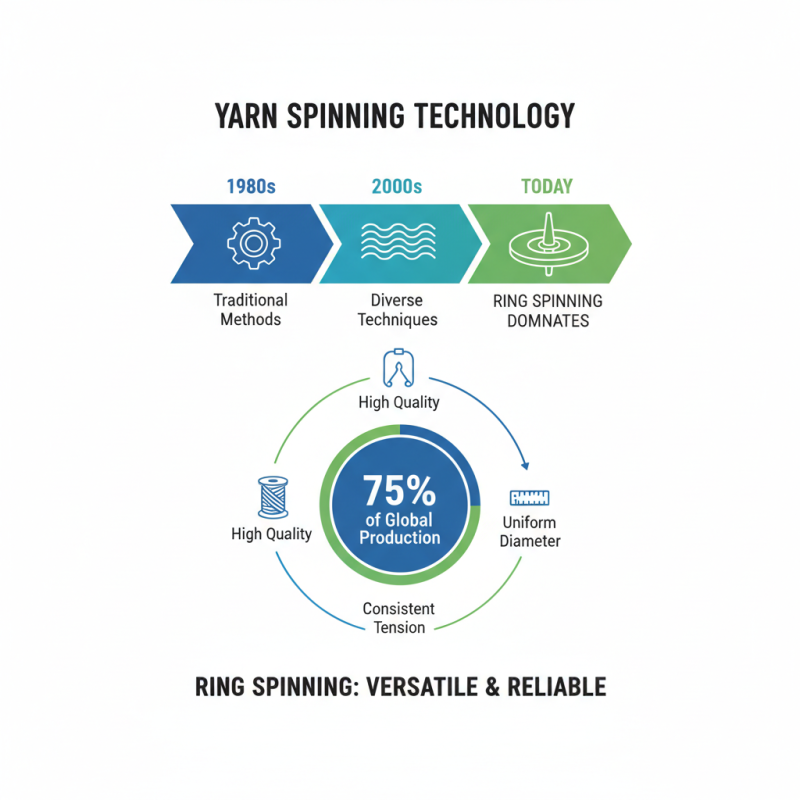
Yarn spinning technology has advanced significantly over the past few decades. Different spinning methods contribute to the variety of yarns available today. Among these, ring spinning remains the most popular, accounting for about 75% of total production. This technology is known for its versatility and ability to produce high-quality yarn with consistent tension and diameter.
Open-end spinning, another prominent technique, has gained traction due to its cost-effectiveness. It generates yarns more quickly, yet can result in a slightly less refined product. Reports show that open-end spinning can reduce production costs by as much as 30%. Despite this, the lower yarn quality means it may not always be the ideal choice for high-end applications.
Air-jet spinning has emerged as a promising alternative. It offers faster production rates and exceptional yarn uniformity. Yet, air-jet technology is complex and requires specialized equipment. According to industry analyses, some manufacturers face challenges in adjusting production to fully optimize this technology. As innovations continue, understanding these spinning methods is crucial for choosing the best yarn for specific applications.
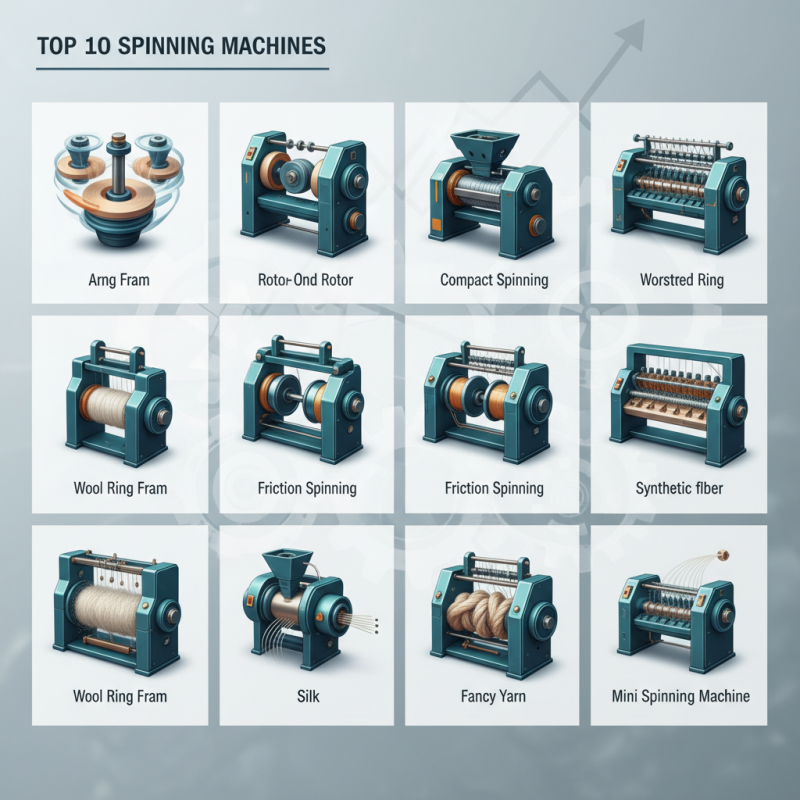
Top 10 Yarn Spinning Machines Based on Performance and Efficiency
When choosing yarn spinning machines, performance and efficiency are crucial factors. Various technologies are available that cater to different production needs. The right machine can enhance the quality of the yarn while reducing energy consumption.
Some machines use advanced automation features, streamlining the spinning process. Efficiency can also be reflected in speed and consistency. However, not every machine offers seamless operation. Issues like thread breakage and inconsistent tension can arise, requiring constant monitoring. Finding balance between speed and quality is essential for any spinning operation.
Advanced features often come with a learning curve. Operators may need additional training to maximize machine potential. It's important to acknowledge that even the best machines can present challenges. Regular maintenance is vital for long-lasting performance. Identifying and addressing problems early can prevent costly downtime. An effective machine not only spins yarn but also contributes to overall production efficiency.
Key Features to Consider When Choosing Yarn Spinning Machines
When selecting yarn spinning machines, it’s crucial to consider specific features. Spindle speed is a key factor. Higher speeds enhance productivity. However, too much speed can lead to more yarn breakage. Find a balance that matches your operation's needs.
Next, think about the machine's adaptability. Some machines can handle various fiber types and yarn counts. This flexibility allows for diverse production. But, compatibility issues can arise. Ensure the machine supports your intended materials.
Lastly, maintenance requirements cannot be overlooked. Machines that need constant servicing can slow your workflow. Ease of maintenance varies widely. Investing time into learning machine upkeep can pay off, but challenges may still exist. Regular checks help prevent production hiccups, but nothing is perfect. Always re-evaluate your choices based on performance and evolving needs.
Future Trends in Yarn Spinning Technology and Innovation
The landscape of yarn spinning technology is evolving rapidly. Innovations are shaping how fibers are processed. The global yarn market is projected to reach over $168 billion by 2027, driven by advances in machinery. Manufacturers are enhancing automation in yarn spinning processes. This trend aims to improve efficiency and reduce waste.
Recent developments focus on sustainability. According to a report, almost 70% of textile manufacturers are investing in eco-friendly practices. These include using recycled fibers and energy-efficient machines. Attention is shifting towards digital technologies, like AI. This integration helps in predictive maintenance, thus prolonging machinery lifespan. Yet, the industry faces challenges. Many companies struggle with the initial costs of upgrading machinery.
Another key trend is smart spinning technology. These systems allow for real-time monitoring of production. They enhance quality control and minimize errors. However, the reliance on digital tools can lead to a skills gap. Workers may need to adapt to these new systems. Training becomes crucial, yet not all companies prioritize it. Innovation is critical, but it raises questions about workforce readiness and adaptation.