
Why Use Stainless Steel Wire Mesh Filters?
In a production line, filtration choices affect product quality, equipment wear, and maintenance time. A Stainless Steel Wire Mesh Filter offers a reusable barrier made from woven metal wire, with openings selected to retain particles of a particular size. You might see one in a pump housing, wash system, or process pipe. The mesh can be inspected, cleaned, and returned to service when its condition allows. That matters.
Its performance depends on more than the material name. Wire diameter, weave, opening size, fluid viscosity, operating pressure, and particle shape all influence filtration and flow. Stainless steel grades also differ; a grade that performs well with water may not suit every chemical or temperature. Check compatibility against actual process conditions, and confirm the mesh rating with the supplier. Guessing from appearance is not enough.
The practical appeal is straightforward: durable construction, precise openings, and the potential for repeated use can make these filters useful in demanding environments. Yet reusable does not mean maintenance-free. Fine particles can block openings, and cleaning methods can damage mesh if they are too aggressive. A small inspection under good light may reveal bent wires or trapped residue. Not every time. The right filter is a balance between particle retention, acceptable pressure drop, service life, and cleaning effort. This guide explores those factors, helping buyers and operators judge when stainless steel mesh is a sensible choice—and when another filtration approach may fit better.
What Stainless Steel Wire Mesh Filters Are and How They Are Made
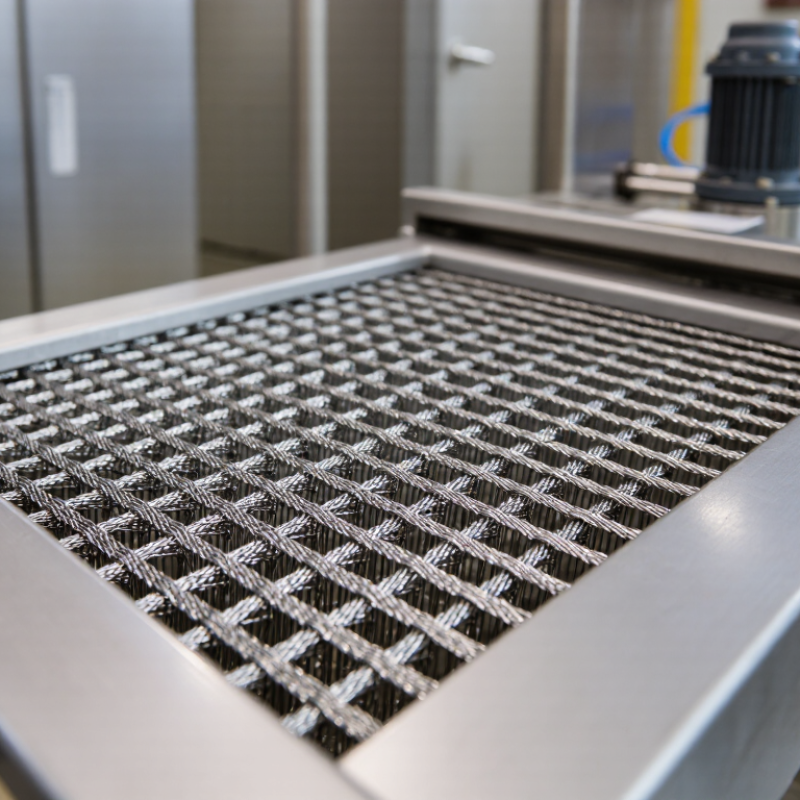
Stainless steel wire mesh filters are made from metal wires arranged into a repeated grid. The openings let air or liquid pass while retaining particles larger than the selected aperture. Small openings matter. Mesh count alone does not describe a filter fully; wire thickness and weave also affect flow and strength. Plain weave crosses each wire over and under its neighbors. Twill weave uses a staggered pattern and can accommodate thicker wires in some designs.
Production starts with stainless steel wire selected for the intended temperature, fluid, and cleaning conditions. The wire is drawn to a controlled diameter, then woven or welded into a sheet. Technicians cut the mesh and may shape it into discs, cylinders, or supported panels. Edges are formed, welded, or fitted into frames to reduce fraying and bypass around the filter. The finished part is cleaned and inspected for dimensions, visible defects, and opening consistency.
A close inspection helps, but it cannot guarantee identical performance in every installation. Actual flow depends on pressure, particle shape, and how quickly the mesh loads with debris. That detail is easy to overlook. Choosing an opening size therefore involves a trade-off: finer mesh captures smaller particles, yet may restrict flow sooner. The right construction comes from matching the mesh and support structure to the working conditions, not from relying on one specification alone.
| Topic | What It Means | Practical Details |
|---|---|---|
| What a wire mesh filter is | A filter made from interwoven stainless steel wires that form openings through which fluid or air can pass while larger particles are retained. | It is a physical screening medium. Its performance depends on the opening size, wire diameter, weave, filter construction, and operating conditions. |
| Common stainless steel grades | Type 304 is widely used for general-purpose applications. Type 316 and 316L contain molybdenum and are often selected for improved resistance to chloride-containing environments. | Grade selection should account for the process fluid, temperature, cleaning chemicals, and exposure conditions. No grade is resistant to every corrosive environment. |
| Mesh count and opening | Mesh count generally describes the number of openings per linear inch. The clear opening also depends on wire diameter. | For a regular square weave, approximate opening in millimetres = (25.4 ÷ mesh count per inch) − wire diameter in millimetres. This estimate does not apply to every weave or filter construction. |
| Common weave styles | Plain weave uses an alternating over-and-under pattern. Twill weave passes each wire over two or more wires before going under, while Dutch weaves use different wire sizes or spacing to create a tighter filtering structure. | Weave choice affects strength, flow, opening geometry, and particle retention. The appropriate design depends on the required filtration duty. |
| How it is made: wire preparation | Stainless steel wire is selected and drawn or supplied to the required diameter. The wire is checked for dimensions and surface condition before weaving. | Wire diameter and consistency influence the finished mesh opening and mechanical strength. |
| How it is made: weaving | Warp wires are held lengthwise while weft wires are woven across them on a mesh loom according to the selected weave pattern. | Weaving controls mesh count and structure. Some filter designs use sintered or layered mesh, which involves additional processing beyond ordinary weaving. |
| How it is made: finishing | The woven mesh may be cut, formed, welded, or attached to a support or frame. Edges can be finished to suit the filter assembly. | Finishing methods vary with the product design and intended service conditions. |
| How it is made: inspection | Finished mesh may be checked for dimensions, weave consistency, visible defects, and conformity with specified requirements. | For critical applications, buyers can specify inspection criteria and request documentation appropriate to the product and process. |
| Why it is used | Stainless steel mesh can provide mechanical strength, corrosion resistance in suitable environments, and tolerance of repeated cleaning. | Reusability and service life depend on the alloy, mesh design, contaminants, cleaning method, and operating conditions. |
| Typical applications | Applications include liquid and gas straining, process filtration, screens, and protective or separation elements in industrial equipment. | Mesh filters are not automatically suitable for fine or absolute filtration; the required retention level and system design should be verified for each application. |