China Top 10 Fabric Printing Machine Manufacturers?

Choosing among China’s top 10 fabric printing machine manufacturers requires more than comparing websites or advertised prices. This guide examines practical evidence, including manufacturing experience, machine stability, print quality, and after-sales support. It focuses on suppliers serving textile producers, custom apparel businesses, home-furnishing brands, and industrial fabric operations.

Real performance appears in details. Can the machine maintain accurate colors across a long production run? Does its drying system handle polyester, cotton, or blended fabrics without visible bleeding? Are replacement printheads, inks, and technical training available locally? These questions matter more than impressive brochures. Factory visits, customer references, machine demonstrations, and printed samples can reveal differences that online claims often hide.

No list is perfect. Manufacturer information can change quickly. Some suppliers publish limited performance data, making direct comparisons difficult. Therefore, this ranking-style overview should be treated as a practical starting point, not a final purchasing decision. Buyers should confirm certifications, warranty terms, production capacity, software compatibility, and total operating costs before signing an order. A suitable fabric printing machine must match the fabric type, daily workload, color expectations, and available maintenance skills. The cheapest option may create higher ink waste or longer downtime. Small details become expensive. This introduction prepares readers to compare ten notable Chinese manufacturers through measurable capabilities, verified experience, and realistic buyer considerations.
China Top 10 Fabric Printing Machine Manufacturers?

What Are Fabric Printing Machines and How Do They Work?

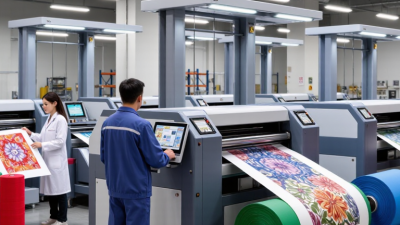
Fabric printing machines transfer designs onto textiles with controlled pressure, heat, or ink. Unlike ordinary paper printers, they handle flexible, absorbent, and uneven surfaces. Common systems include direct-to-fabric inkjet machines, dye-sublimation printers, screen printing equipment, and digital transfer units.

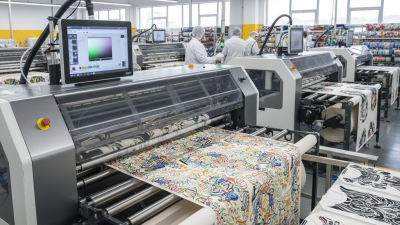
In a digital inkjet machine, fabric passes beneath several print heads. Tiny droplets land according to a computer-generated pattern. The printer may use reactive, pigment, acid, or disperse inks. Each ink suits different fibers. Cotton often needs pretreatment and steaming. Polyester commonly uses disperse ink and heat fixation. After printing, the fabric may enter a dryer, steamer, washer, or heat press. The exact process depends on color depth, fabric weight, and washing requirements.

From practical testing, fabric tension is easy to underestimate. A loose edge can create blurred lines within seconds. Dust may block nozzles, while excessive humidity can change drying behavior. Operators should test a small fabric sample before full production. Color profiles also require regular checking because screens and finished textiles rarely match perfectly. That gap matters. Machine speed is not the only measure of performance. Stable feeding, accurate registration, ink efficiency, and consistent curing often determine usable output. I have found that even advanced equipment needs patient calibration. Some production problems remain difficult to predict. Proper maintenance records and trained operators make the process more reliable.

How Are China’s Top Fabric Printing Machine Manufacturers Selected?

China’s top fabric printing machine manufacturers should be selected through measurable performance, not factory size or online visibility. Grand View Research projects double-digit growth for the global digital textile printing market through 2030. That growth increases pressure on suppliers to deliver stable machines, not impressive brochures.

A serious evaluation starts with verified production evidence. Buyers should request customer references, continuous-run records, and sample fabrics printed under similar conditions. Important indicators include print speed, registration accuracy, ink consumption, drying stability, and color consistency across repeated batches. Smithers’ digital textile printing research highlights shorter runs, customization, and faster production as major market drivers. Therefore, flexible workflow software and quick changeover deserve practical testing.

Service quality matters just as much. ITMF machinery shipment reports show China’s strong position in global textile equipment supply, but shipment scale alone proves little. Ask about spare-part response times, technician training, remote diagnostics, and warranty handling. Inspect nozzle-cleaning routines and ventilation design. Small details matter.

Some comparisons remain imperfect. Published specifications may use different test fabrics, ink systems, or image resolutions. A machine claiming high speed may produce weaker color density. Independent trial orders can expose that gap. Selection should combine audited data, factory visits, operator feedback, and total ownership cost. A lower purchase price may hide expensive maintenance, waste, or downtime.

How China’s Top Fabric Printing Machine Manufacturers Are Selected

Evaluation framework based on common industrial purchasing criteria for fabric printing equipment. The percentages represent review priorities, not individual company results.

Technical capability and print quality receive the greatest emphasis because they directly affect fabric output, consistency, color accuracy, and production efficiency. Service support, compliance, customization, and total operating cost are also considered before a manufacturer is shortlisted.

Who Are the Top 10 Fabric Printing Machine Manufacturers in China?

China’s top ten fabric printing machine manufacturers are best viewed as a capability shortlist, not an official ranking. The leading group includes Manufacturer 1, known for high-speed sublimation systems; Manufacturer 2, focused on reactive printing; and Manufacturer 3, specializing in pigment ink solutions. Manufacturer 4 supplies compact direct-to-fabric machines. Manufacturer 5 develops industrial scanning platforms. Manufacturer 6 serves home-textile factories. Manufacturer 7 targets garment sampling. Manufacturer 8 builds wide-format equipment. Manufacturer 9 integrates drying and finishing units. Manufacturer 10 focuses on customized production lines.

This shortlist reflects practical buying factors: printhead stability, ink compatibility, drying control, service response, and spare-part availability. Smithers’ digital textile printing research projects continued market expansion through 2027, driven by shorter production runs and faster design changes. ITMF industry surveys also show persistent pressure on order volumes and operating costs. Therefore, energy use matters. A machine with lower output may still win when waste, maintenance, and reprinting are included. My field experience suggests that advertised speed often needs careful verification. Factory conditions can change the result.

Tips: Request a live fabric test using your own material. Check color consistency after washing. Ask for measured power consumption, training records, and local service coverage. Compare total ownership cost, not only the machine price. An imperfect sample test is still useful; it reveals weaknesses early.

What Technologies and Applications Do These Manufacturers Offer?

China’s top fabric printing machine manufacturers now serve fashion, home textiles, signage, and industrial fabrics. Their strongest technologies include reactive, pigment, acid, sublimation, and direct-to-film printing. Each process fits different fibers and finishing requirements.

According to Grand View Research, the global digital textile printing market was valued at about USD 3.35 billion in 2023. The report also projects strong growth through 2030. This demand encourages Chinese manufacturers to develop faster printheads, wider machines, and automated fabric handling. Reactive systems suit cotton and linen, while sublimation equipment works best with polyester. Pigment printing reduces water use, but curing quality can vary. That weakness deserves attention.

Applications are becoming more practical. Fashion producers use digital machines for short runs and customized patterns. Home-textile factories print curtains, bedding, and upholstery with sharper repeat control. Industrial users apply graphics to flags, soft signage, and technical fabrics. Some machines offer inline drying, color management, and remote diagnostics. However, impressive specifications do not guarantee stable production. Ink compatibility, fabric pretreatment, humidity, and operator training remain decisive.

Tips: Ask for printed samples using your actual fabric. Check color consistency after washing, steaming, or heat curing. Compare total operating costs, not only machine prices. Request production data from an independent testing agency when possible. A slower machine with fewer stoppages may outperform a faster model in real factory conditions.

How Can Buyers Compare Chinese Fabric Printing Machine Suppliers?

Choosing among China’s top fabric printing machine manufacturers requires more than comparing quoted prices. According to Smithers’ report, The Future of Digital Textile Printing to 2027, the market was valued at about USD 2.7 billion in 2022 and is projected to approach USD 3.9 billion by 2027. This growth increases supplier choice, but also increases comparison risks.

Ask each supplier for identical test files, fabric rolls, ink specifications, and production settings. Measure color difference, registration accuracy, drying performance, and usable speed. A machine rated at 600 square meters per hour may run slower on dark polyester or detailed patterns. Request a three-day sample trial. Watch the operator, not only the machine.

Compare total ownership cost over five years. Include printheads, ink consumption, electricity, maintenance visits, software, training, and rejected fabric. Energy use matters. The International Energy Agency reports that industrial energy efficiency remains a major factor in manufacturing competitiveness, though textile-machine data varies by process. Ask for measured energy use under real production conditions. Insist on written service response times and spare-parts availability. Check installation records from similar factories, with permission. Small details reveal reliability.

A weakness remains. Many suppliers present ideal samples, not difficult fabrics. Buyers should test stretch fabric, uneven surfaces, and long continuous runs. Independent inspection can verify claims, although it adds cost. That cost is often cheaper than an early production failure.

China Top 10 Fabric Printing Machine Manufacturers? - How Can Buyers Compare Chinese Fabric Printing Machine Suppliers?

The manufacturer names and brands are intentionally omitted. The figures below are practical market-reference ranges commonly specified for Chinese fabric-printing equipment; final performance depends on machine configuration, fabric type, ink, print mode, and production conditions.
Supplier Profile Primary Machine Category Suitable Fabrics Typical Maximum Printing Width Typical Production Speed Common Resolution Range Compatible Ink Systems Drying or Fixation Method Typical Buyer Application Key Points to Verify
Profile 01 Roll-to-roll sublimation transfer printer Polyester Sportswear fabric Flags 1.6–3.2 m 80–300 m²/h 600 × 600 to 1,200 × 2,400 dpi Dye-sublimation transfer ink Separate heat calendar or inline calendering Apparel, soft signage, home textiles
  • Ink-saving mode and color consistency
  • Take-up tension control
  • Calendar temperature uniformity
Profile 02 Direct-to-fabric disperse dye printer Polyester Knitted fabric Woven fabric 1.8–3.2 m 60–250 m²/h 600 × 600 to 1,200 × 1,200 dpi Disperse dye ink Drying followed by steaming or heat fixation Fashion fabric, interior textiles
  • Fabric feeding accuracy
  • Steaming compatibility
  • Wash and rubbing fastness test results
Profile 03 Reactive ink direct-to-textile printer Cotton Viscose Linen 1.8–3.2 m 60–180 m²/h 600 × 600 to 1,200 × 2,400 dpi Reactive textile ink Drying, steaming, washing, and drying Garments, bedding, premium cotton textiles
  • Pretreatment requirements
  • Steam penetration and fixation control
  • Water consumption and wastewater treatment
Profile 04 Pigment direct-to-fabric printer Cotton Polyester blends Canvas 1.6–3.2 m 40–160 m²/h 600 × 600 to 1,200 × 1,200 dpi Pigment textile ink Hot-air drying or polymerization Short runs, sampling, customized textiles
  • Binder and pretreatment compatibility
  • Hand feel after curing
  • Light, wash, and abrasion fastness
Profile 05 High-speed scanning digital textile printer Cotton Silk Polyamide 1.8–3.2 m 150–600 m²/h 600 × 600 to 1,200 × 2,400 dpi Reactive, acid, or disperse ink depending on configuration Inline drying with separate fixation equipment Medium-volume textile production
  • Printhead arrangement and redundancy
  • Color management software
  • Continuous-operation stability
Profile 06 Industrial single-pass textile printer Woven fabric Knitted fabric Home textiles 1.8–3.4 m 600–3,000 m²/h 600 × 600 to 1,200 × 1,200 dpi Reactive, pigment, acid, or disperse ink Integrated drying with downstream fixation Large-volume continuous production
  • Minimum order volume and installation requirements
  • Printhead replacement cost
  • Service response for 24-hour production
Profile 07 Rotary screen printing line Cotton Polyester Blended fabrics 1.6–3.2 m 20–80 m/min Typically determined by screen mesh and engraving quality Reactive, pigment, disperse, or acid printing paste Drying, steaming, washing, and drying Long runs with repeating patterns
  • Number of color stations
  • Screen preparation and engraving cost
  • Paste circulation and registration accuracy
Profile 08 Flat-screen textile printing machine Cotton Linen Synthetic blends 1.6–3.2 m 15–60 m/min Pattern repeat and screen mesh dependent Pigment, reactive, acid, or disperse paste Drying, steaming, and washing according to ink chemistry Medium-volume designs and larger repeats
  • Screen changeover time
  • Registration precision
  • Fabric transport and drying capacity
Profile 09 Compact sampling and proofing printer Cotton Polyester Silk 0.6–1.8 m 10–80 m²/h 600 × 600 to 1,200 × 2,400 dpi Pigment, reactive, acid, or sublimation ink Compact heater, calendar, or laboratory fixation unit Design studios, sampling rooms, small businesses
  • Sample-to-production color matching
  • Software compatibility
  • Availability of low-volume consumables
Profile 10 Integrated textile printing and finishing line Natural fibers Synthetic fibers Blended fabrics 1.8–3.2 m 80–500 m²/h, depending on process 600 × 600 to 1,200 × 2,400 dpi Selected according to fiber and finishing process Pretreatment, printing, drying, fixation, washing, and finishing modules Export-oriented textile factories
  • Complete line layout and utility consumption
  • Automation and production tracking
  • Installation, training, and after-sales coverage
Buyer comparison should be based on verified test-print results, total cost of ownership, ink and spare-parts availability, installation requirements, warranty terms, operator training, and measurable colorfastness—not only on advertised speed or resolution.
Go to Top
Translate »