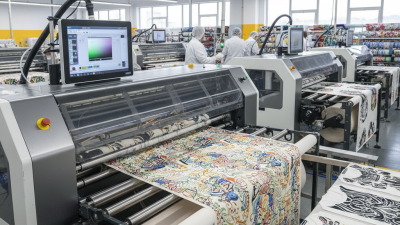
Textile production is shifting toward shorter runs, faster sampling, and more personalized products. A textile printing machine now influences color accuracy, fabric handling, production speed, and operating costs. It also affects waste, maintenance, and delivery reliability.
Grand View Research estimated the global digital textile printing market at approximately USD 2.31 billion in 2022. Its report projected a compound annual growth rate of 12.1% from 2023 to 2030. Smithers also forecast strong expansion in digital textile printing through 2028. However, market figures differ because research firms define equipment, inks, and applications differently. That detail matters.
Global buyers therefore need more than a popularity list. They should compare screen, rotary, sublimation, direct-to-fabric, pigment, reactive, acid, and hybrid technologies. Each machine serves different materials and production conditions. A dye-sublimation printer may suit polyester sportswear. A reactive system may perform better on cotton home textiles. An industrial pigment printer can reduce process steps, but ink costs may be higher.
This guide examines ten major textile printing machine types. It considers print quality, fabric compatibility, throughput, energy use, maintenance, and total ownership cost. These criteria reflect practical purchasing concerns reported by manufacturers, textile engineers, and market analysts. Yet no ranking fits every factory. That is the uncomfortable part.
Buyers should test actual fabrics before signing contracts. Sample testing often reveals problems hidden in brochures. Poor registration, uneven color, or slow drying can change the investment decision. Reliable selection combines published data with production-floor evidence and supplier support.
Textile printing machines apply controlled color and patterns to fabric, garments, or transfer media. Their classification usually depends on printing method, fabric handling, ink system, and production volume. A machine may fit more than one category, so classification is not always perfect.
Screen printing machines use stencils and separate screens for each color. They suit large orders with bold, consistent designs. Rotary screen machines automate this process for continuous fabric rolls. Digital inkjet machines print variable artwork directly from design files. They reduce setup time and support detailed images, gradients, and short runs. Transfer printing machines first print onto paper or film, then move the design using heat or pressure. Direct-to-fabric systems print onto prepared textiles and may require steaming or washing afterward.
Tips: Check the fabric path, print width, drying unit, and maintenance access before buying. Match the ink system with fiber type. Cotton, polyester, and blended fabrics can require different pretreatment and curing conditions. Ask for test samples using your actual fabric, not a supplier’s ideal swatch. A practical evaluation should measure color consistency, fabric tension, waste, energy use, and operator workload. Faster is not always better. I have seen buyers focus on speed, then struggle with drying capacity and rework. The best choice balances image quality, order size, fabric behavior, and reliable technical support.
Global textile buyers usually compare machines by fabric, color depth, order size, and maintenance skill. Flatbed screen printers suit medium runs and detailed layouts, while rotary screen printers handle continuous production efficiently. Digital inkjet printers support short runs, variable graphics, and quick sampling. Direct-to-garment machines print on finished garments, but fabric preparation can affect consistency. Sublimation printers work well with polyester and create sharp sportswear graphics. Heat-transfer machines apply printed films or papers with controlled pressure and temperature. Pigment printing machines offer broad fabric compatibility and simpler washing requirements. Reactive printing machines produce bright, soft results on cotton, though steaming and washing demand more equipment. Acid printing machines serve wool, silk, and nylon with strong color penetration. Disperse printing machines suit synthetic fabrics and high-speed industrial workflows.
Tips: Request printed samples using your actual fabric. Check color accuracy, drying time, energy use, and operator access. Ask how often nozzles, screens, belts, or heating parts require service. Small details matter.
Experience shows that the fastest machine is not always the best investment. A digital system may reduce setup waste, yet its ink cost can rise during heavy production. Rotary equipment may deliver impressive output, but changing designs takes time. I have seen buyers focus on speed and overlook ventilation, humidity control, and wastewater handling. That mistake can become expensive. Test the complete workflow before purchase, including pretreatment, curing, washing, inspection, and packaging. Some assumptions will be wrong. That is normal. Recheck them with measured samples and realistic production data.
Top 10 Textile Printing Machine Types for Global Buyers
Textile printing machines differ by method, fabric, ink, and production scale. Flatbed screen machines suit detailed designs and medium runs, while rotary screen systems support long, continuous production. Digital direct-to-fabric printers offer faster sampling and personalized patterns. However, their output depends heavily on fabric pretreatment and drying control.
Choose the ink after identifying the textile. Reactive inks work well on cotton and other cellulose fibers, but they require steaming and washing. Pigment inks are more flexible and often simplify finishing. Dye-sublimation systems mainly suit polyester fabrics and produce bright sportswear graphics. Acid inks fit many nylon and silk applications. The wrong ink can cause weak color, bleeding, or poor wash resistance.
Scale changes the practical choice. Small workshops may prefer digital machines with low setup waste. Large factories often combine rotary, transfer, or roller systems with automated feeding and inspection. Check fabric width, drying capacity, color management, maintenance access, and operator skill before purchasing. A machine rated for high speed may slow down with heavy fabric or complex repeats. That detail is easy to miss. Test the actual fabric, not only a supplier’s sample. Keep records of ink batches, curing temperatures, and wash results. Even experienced teams sometimes overestimate laboratory performance.
Global buyers compare more than print speed. They examine usable output, labor, ink consumption, maintenance, and fabric preparation. Smithers’ report, The Future of Digital Textile Printing to 2028, values the digital textile printing market at about USD 2.9 billion in 2023. It forecasts growth to approximately USD 4.3 billion by 2028. This growth favors direct-to-fabric, pigment, reactive, acid, and sublimation systems. Rotary and flatbed screen machines still offer strong economics for long production runs. Digital machines usually reduce setup time for short, customized orders.
The material changes the calculation. Textile Exchange’s 2024 Materials Market Report states that polyester represented roughly 59% of global fiber production in 2023. That supports sublimation demand, especially for sportswear and interior fabrics. However, polyester does not automatically mean lower cost. Heat fixation, transfer paper, ventilation, and finishing space add expenses. Reactive printing may deliver better cotton color depth, but washing and wastewater treatment increase process complexity. A low ink price can mislead. Real cost per sellable meter matters more.
Tips: Request a 100-meter trial using your actual fabric. Measure rejected meters, power use, operator minutes, and cleaning time. Ask suppliers for maintenance intervals and spare-part prices. Compare total cost over three years, not only the machine quotation. Check independent test conditions carefully. Reports differ, and buyer assumptions can remain imperfect. That is where many comparisons fail.
Top 10 Textile Printing Machine Types for Global Buyers
Choosing among direct-to-garment, direct-to-fabric, sublimation, screen, rotary, and digital textile printers requires more than comparing output speed. Installation conditions often decide performance. Check floor strength, door width, power stability, ventilation, humidity, and temperature before shipment. A machine may fit the brochure but fail in a crowded workshop. Small details matter.
Compliance must cover electrical safety, noise, emissions, wastewater, fire protection, and chemical handling. Ask for current technical files, safety data sheets, conformity documents, and operating limits. Requirements differ by destination, so local inspection should happen before purchase. Do not guess. During commissioning, request test prints, color calibration, nozzle checks, and operator training. Record the settings used for each fabric type. This evidence can prevent expensive disputes later.
Maintenance planning should include daily cleaning, weekly filter checks, lubrication schedules, printhead protection, and spare-part availability. A supplier should provide clear manuals, remote support, response times, warranty terms, and technician training. Request references from facilities with similar fabrics and production volumes. A factory acceptance test can reveal alignment, drying, registration, and software issues before delivery. Keep records. I have seen buyers focus on machine price and overlook installation labor, import procedures, consumables, and downtime. That mistake is understandable, but it weakens the real cost comparison. A reliable supplier explains limitations, not only advantages. Some evaluations remain imperfect because actual fabric behavior appears only after extended production. Review the decision after the first ninety days.
| No. | Machine Type | Best-Suited Materials and Applications | Typical Production Profile | Installation Requirements | Key Compliance Considerations | Routine Maintenance | Supplier Evaluation Checklist |
|---|---|---|---|---|---|---|---|
| 1 | Flatbed Screen Printing Machine | Cotton, polyester, blends, knitted fabrics, garments, home textiles, and medium-to-large repeat designs. | Suitable for medium and high-volume production; strong color coverage and economical for repeated designs. | Level floor, stable electrical supply, compressed air where required, screen-preparation area, drying or curing equipment, and adequate ventilation. | Ink chemical safety, wastewater handling, worker protection, electrical safety, and local occupational ventilation requirements. | Clean squeegees and pallets, inspect screen frames, lubricate moving parts, check registration, and remove dried ink from working surfaces. | Verify registration accuracy, print consistency, spare-screen compatibility, training, installation support, warranty terms, and availability of replacement parts. |
| 2 | Rotary Screen Printing Machine | Woven and knitted fabrics, continuous yardage, fashion textiles, towels, upholstery, and large repeat patterns. | High-throughput continuous production with consistent repeat placement and strong productivity on long runs. | Large production area, accurate floor leveling, fabric feeding and take-up space, compressed air, drying or steaming equipment, and process ventilation. | Chemical storage, effluent treatment, noise and machine guarding, fire protection, electrical conformity, and restricted-substance controls for inks and auxiliaries. | Inspect rotary screens, bearings, pumps, belts, color-registration systems, squeegee assemblies, filters, and fabric-tension controls. | Assess maximum fabric width, repeat range, registration stability, changeover time, energy use, service response, commissioning support, and operator training. |
| 3 | Direct-to-Garment Inkjet Printer | Cotton and cotton-rich T-shirts, sweatshirts, promotional garments, custom apparel, and short-run personalized products. | Flexible short-to-medium runs with low plate setup requirements and economical variable-data printing. | Clean, temperature-controlled room; stable power; pretreatment station; heat press or conveyor dryer; suitable ventilation; and lint-controlled workflow. | Ink safety data sheets, wastewater and pretreatment disposal, electrical safety, worker exposure controls, and textile chemical restrictions. | Daily nozzle checks, printhead cleaning, white-ink circulation, platen cleaning, ink-line inspection, and periodic calibration. | Check printhead availability, white-ink stability, color-management tools, pretreatment compatibility, service training, software updates, and total ink cost per garment. |
| 4 | Direct-to-Film Transfer Printer | Cotton, polyester, blends, dark garments, workwear, sportswear, bags, and mixed-fabric products. | Efficient for on-demand graphics, small batches, detailed artwork, and applications requiring broad fabric compatibility. | Temperature-stable workspace, printer and powder-shaker area, curing oven, ventilation, powder-handling controls, and reliable power. | Fine-powder exposure control, ventilation, fire prevention, ink and adhesive chemical management, waste handling, and finished-product restricted-substance testing. | Perform nozzle checks, maintain white-ink circulation, clean film paths, remove adhesive buildup, inspect filters, and verify curing temperature. | Evaluate transfer adhesion, wash durability, film and powder compatibility, curing uniformity, automation level, spare-part supply, and technical response time. |
| 5 | Dye-Sublimation Transfer Printer | Polyester fabrics, sportswear, flags, soft signage, home décor, promotional products, and cut-and-sew panels. | Excellent for photographic graphics, all-over designs, and short-to-medium production runs on polyester. | Printer, transfer paper handling, calendar or flat heat press, ventilation, stable humidity and temperature, and sufficient space for printed rolls. | Ink and paper safety documentation, heat protection, electrical conformity, ventilation, waste-paper management, and product labeling requirements. | Clean printheads and rollers, control paper tracking, inspect heater surfaces, calibrate color, manage ink levels, and prevent paper dust accumulation. | Compare color repeatability, maximum width, transfer efficiency, dryer or calendar integration, RIP compatibility, energy consumption, and after-sales support. |
| 6 | Direct-to-Fabric Reactive Inkjet Printer | Cellulosic fibers such as cotton, linen, viscose, and rayon for apparel, bedding, scarves, and fashion fabrics. | High-quality production for detailed patterns and medium-to-long runs, normally followed by steaming and washing. | Pretreatment system, controlled fabric feeding, printer, steamer, washer, dryer, water supply, drainage, wastewater treatment, and process ventilation. | Reactive-dye handling, water discharge limits, chemical storage, wastewater treatment, worker protection, and testing for restricted substances. | Clean printheads, maintain pretreatment rollers, inspect pumps and filters, control fabric tension, monitor steam quality, and clean washing equipment. | Review color yield, wash fastness, water consumption, pretreatment control, wastewater requirements, integration capability, commissioning, and process know-how. |
| 7 | Direct-to-Fabric Pigment Inkjet Printer | Cotton, polyester, blends, linen, viscose, home textiles, décor fabrics, and materials requiring broad fiber compatibility. | Suitable for sampling, short-to-medium runs, and flexible production because steaming and washing are generally not required after curing. | Fabric coating or pretreatment unit where needed, printer, hot-air or calendar curing, lint control, stable power, and ventilation. | Pigment and binder chemical safety, curing emissions, wastewater and cleaning-fluid disposal, electrical safety, and finished-product chemical testing. | Maintain printheads, clean fabric paths, inspect curing units, check binder application, calibrate color, and replace filters according to service intervals. | Test hand feel, crocking and wash fastness, curing consistency, fabric range, pretreatment needs, operating cost, training, and spare-part logistics. |
| 8 | Acid Inkjet Textile Printer | Nylon, silk, wool, polyamide blends, scarves, swimwear, fashion accessories, and other protein or polyamide fibers. | High-detail printing for fashion and specialty textiles, commonly requiring steaming and washing for fixation. | Pretreatment equipment, printer, steamer, washer, dryer, water supply, drainage, effluent controls, and appropriate chemical storage. | Acid-dye chemical handling, wastewater treatment, steam and heat safety, worker protection, and compliance with textile restricted-substance requirements. | Clean printheads, monitor ink circulation, inspect pretreatment and steaming systems, maintain washing units, and verify color profiles. | Assess shade accuracy, penetration, fixation and wash fastness, compatible fabric range, water and energy use, process integration, and local technical support. |
| 9 | Textile Heat Transfer Press | Garments, cut panels, polyester sportswear, cotton apparel, transfer films, sublimation paper, labels, and small-format textile products. | Best for sampling, customization, logos, numbered sportswear, and low-to-medium volume finishing operations. | Stable power, heat-resistant work surface, ventilation, clearance around heated components, and calibrated temperature and pressure controls. | Burn prevention, electrical safety, heat-surface guarding, ventilation for transfer materials, and safe handling of release papers and adhesives. | Clean platen surfaces, inspect hinges and pneumatic systems, verify temperature and pressure calibration, and replace worn silicone pads. | Check platen uniformity, pressure repeatability, cycle time, temperature accuracy, safety guarding, replacement-pad availability, and operator ergonomics. |
| 10 | Laser Textile Printing and Engraving System | Denim, felt, synthetic textiles, coated fabrics, nonwovens, decorative panels, cutwork, and surface effects. | Useful for digital engraving, distressing, perforation, cutting, and personalized textile effects with minimal physical tooling. | Dedicated enclosed area, extraction and filtration, cooling system where specified, stable electrical supply, fire-resistant setup, and controlled material storage. | Laser classification and guarding, interlock testing, exhaust compliance, fire prevention, operator training, material-emission assessment, and electrical safety. | Clean lenses and mirrors, inspect extraction filters, align the optical path, test interlocks, check belts and guides, and remove textile residue. | Evaluate laser power stability, work-area size, edge quality, extraction performance, software support, safety documentation, training, and service availability. |